Ventilation Components in Paphos: 4 Factory Opportunities
What is the opportunity for ventilation manufacturing in Paphos?
The opportunity is a shared industrial base for factory-made ventilation components, rather than another air-conditioning installation company. Mechanical contractors would remain the installation partners, while the factory supplies the parts that move, filter and quiet the air.
In hotels, restaurants, clinics and commercial buildings, equipment is only part of the ventilation system. Duct transitions, replacement filters, acoustic sections and rooftop interfaces must fit the building and arrive when the contractor needs them.
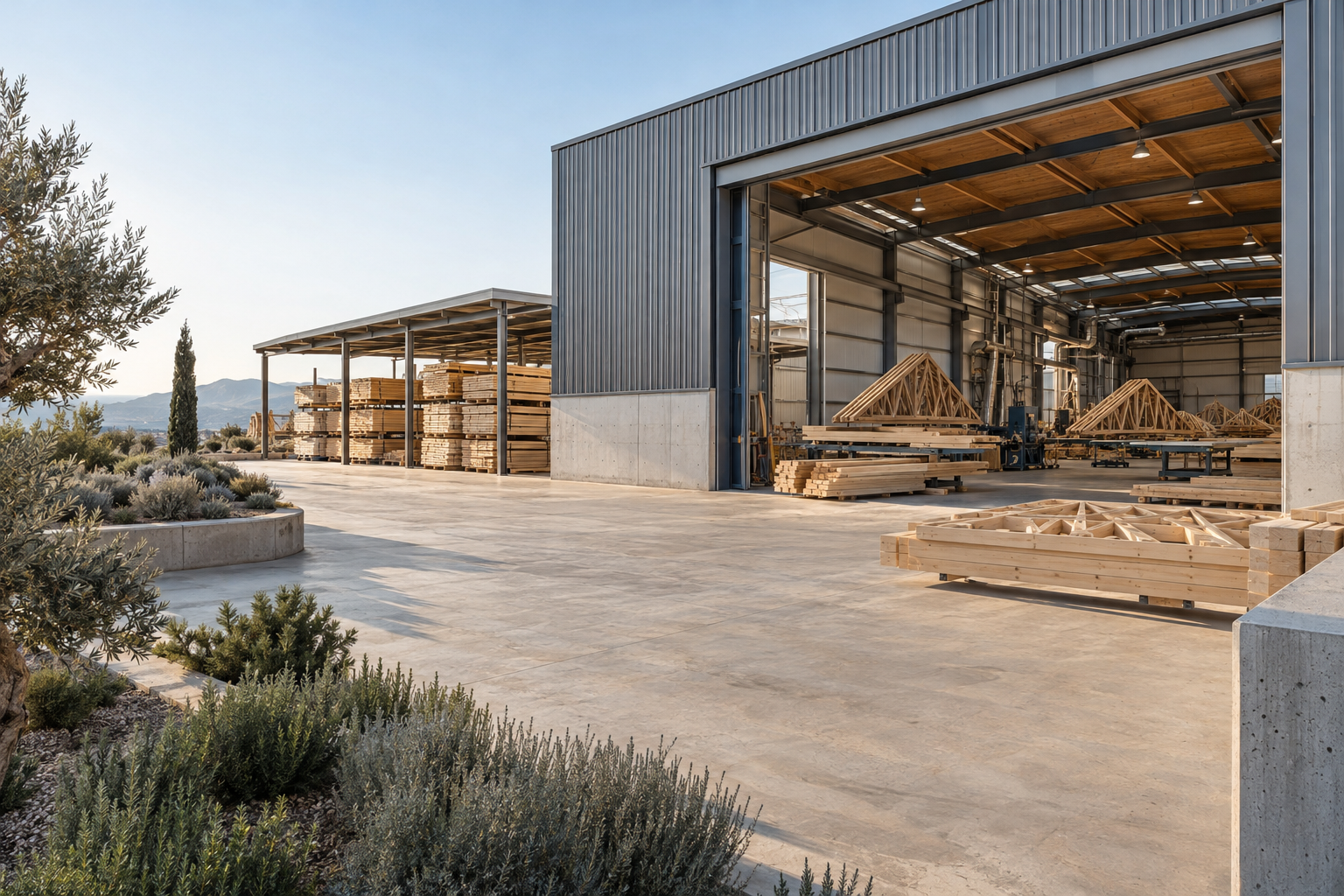
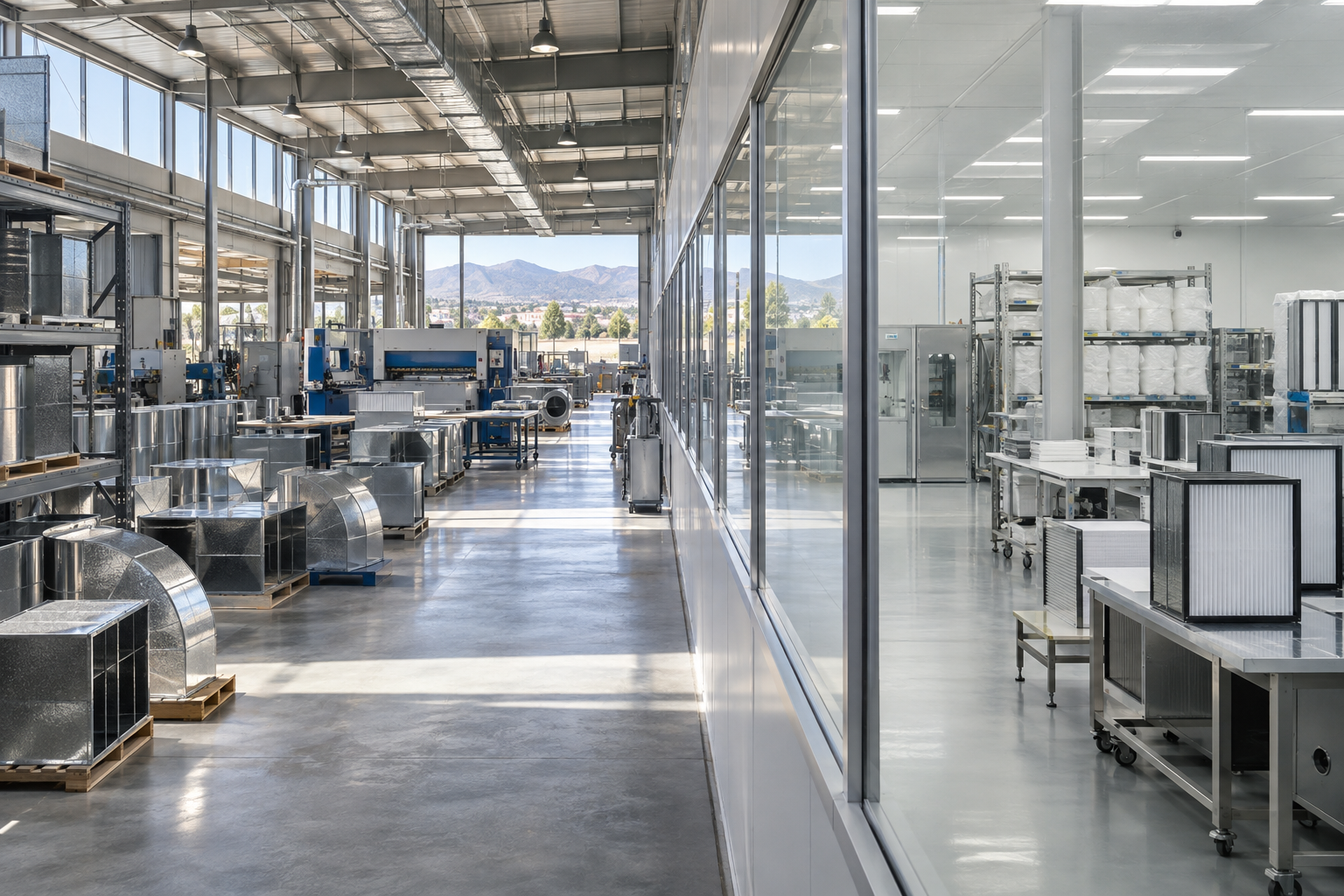
A business in Anatoliko, Paphos could bring these activities together through shared drawing preparation, purchasing, fabrication and dispatch. However, shared premises should not mean shared airborne contamination. Dusty metalworking and clean filter assembly need physically separated production environments.
These are potential service gaps, not verified absences. Paphos may already have capable fabricators and distributors. The investment question is whether customers will pay for a particular improvement, such as complete labelled packages, unusual dimensions or dependable replenishment.
Why investigate Paphos now?
Paphos is worth investigating because building maintenance and refurbishment create practical ventilation requirements that can be tested without relying on forecasts of rapid market growth.
Hotels may need replacement components during refurbishment. Restaurants may face awkward service routes. Commercial maintenance teams may struggle with undocumented filter dimensions. None of these possibilities proves sufficient demand, but each gives an investor a concrete interview topic.
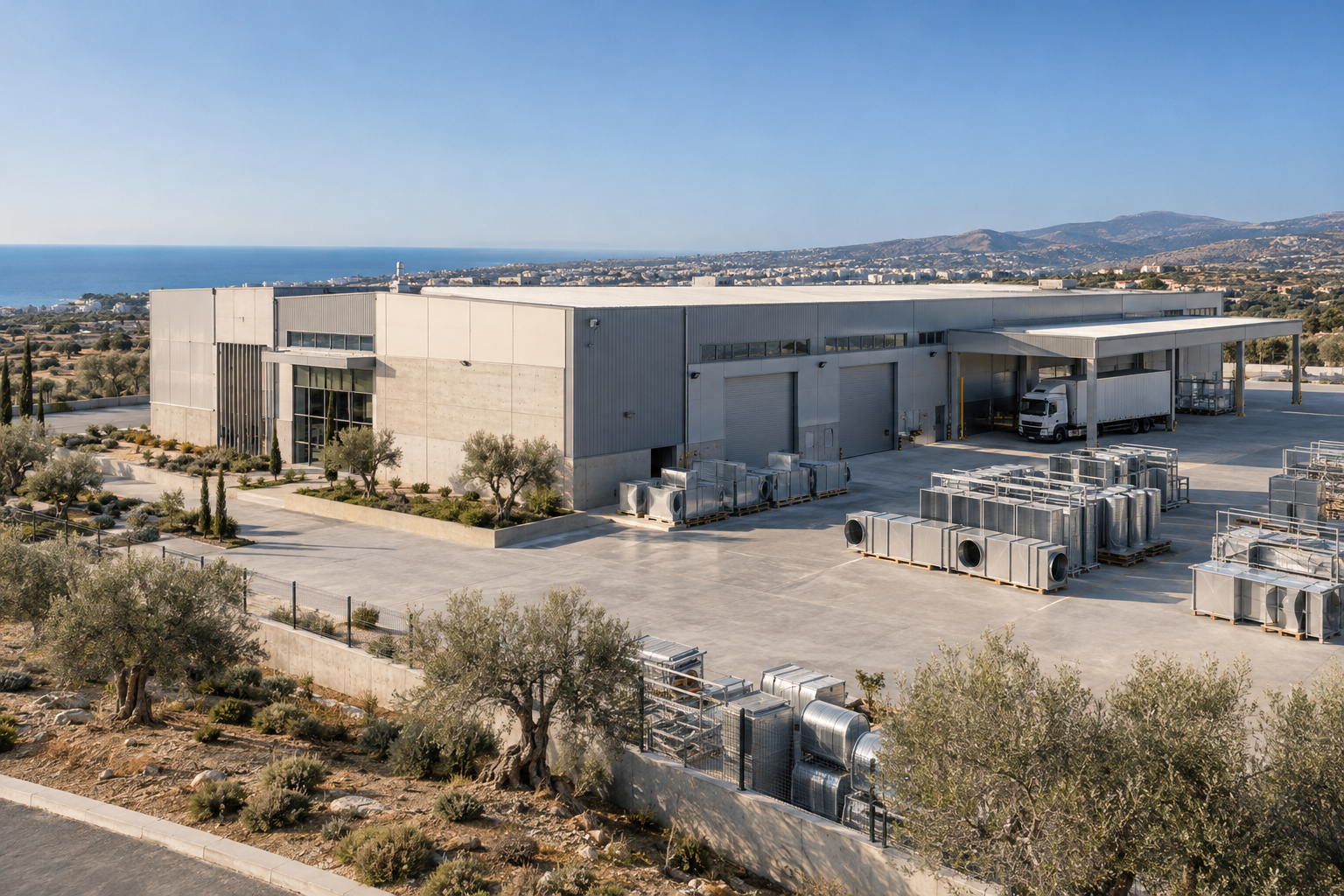
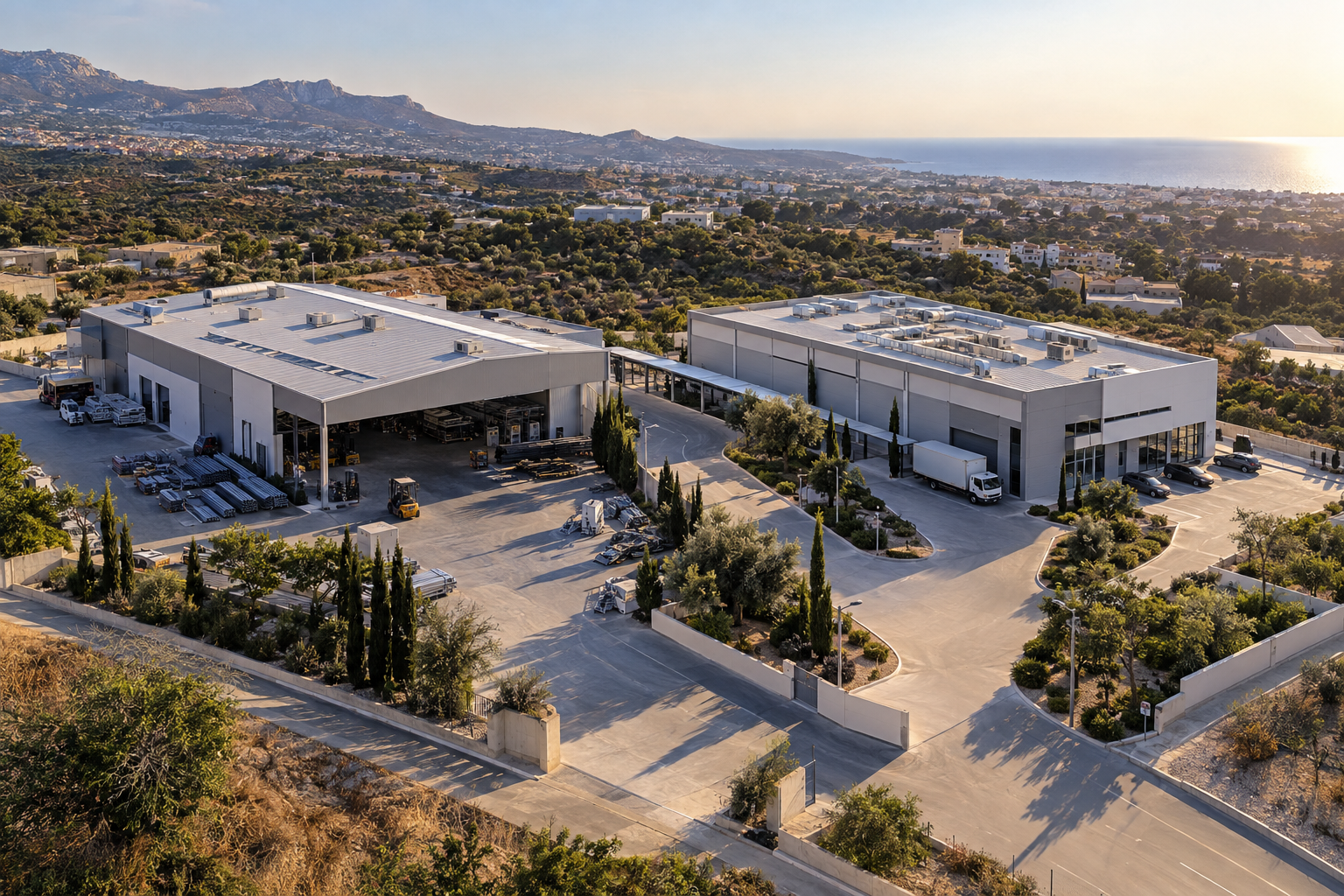
Anatoliko also offers a useful logistics position. Domenica Group describes its industrial plots as approximately 1 minute from the Limassol to Paphos highway, 10 minutes from Paphos airport and 5 minutes from Paphos, with journey times depending on conditions. Highway access matters particularly for bulky duct deliveries and collections by contractors.
Operating in Cyprus, an EU member state, also makes product documentation an important part of the proposition. Customers need reliable specifications and traceability, not simply a locally made alternative. Applicable Cyprus and EU requirements should be checked for each product category and intended use.
Which four products could anchor the factory?
Four complementary product lines could combine project-based fabrication with repeat-order consumables, although a new operator should launch only those supported by trial demand.
1. Could made-to-measure ductwork win contractor accounts?
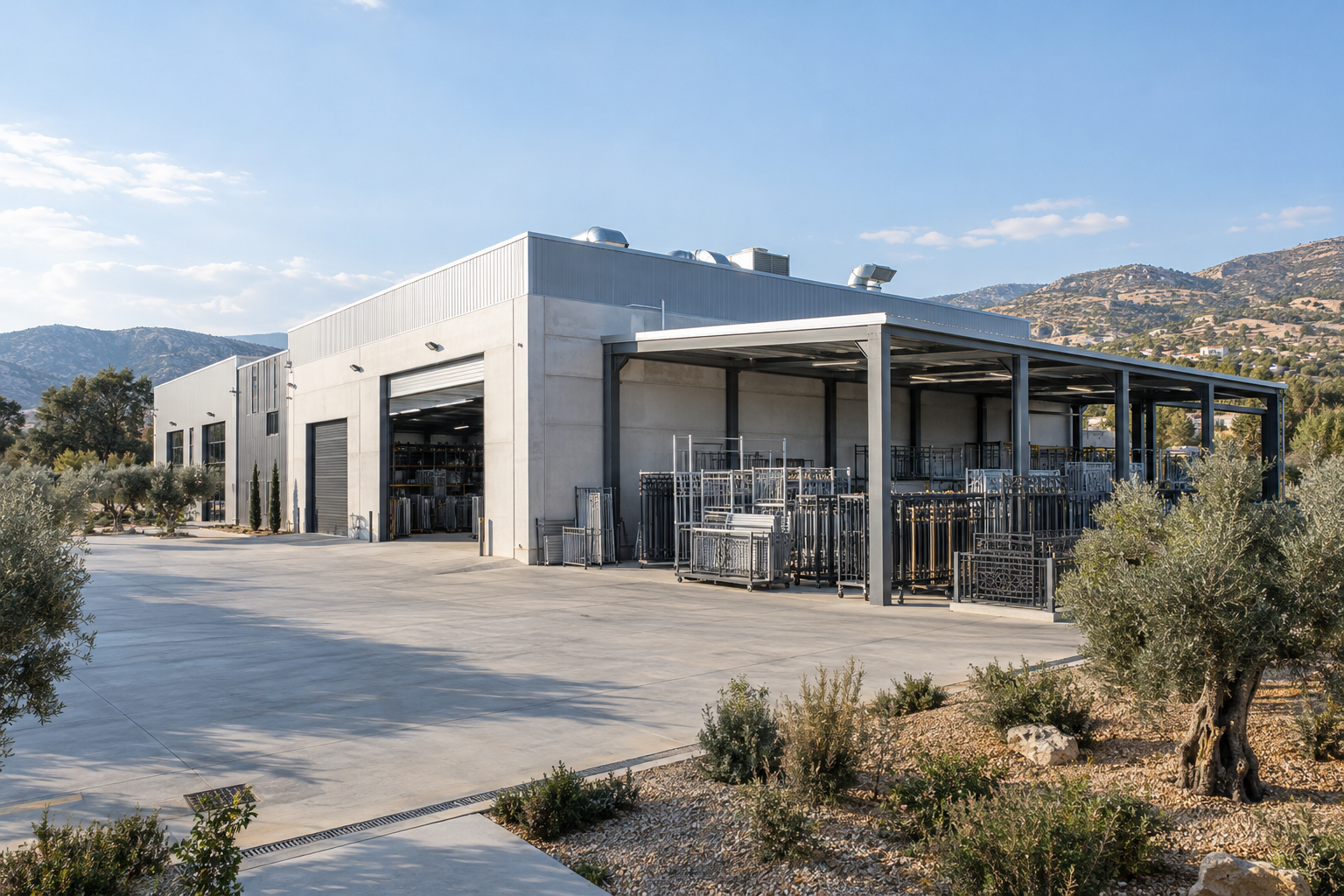
Custom ductwork could win repeat accounts if it reduces contractors' preparation time and site rework. The product is a complete, labelled package, not just cut and folded sheet metal.
Packages might include bends, transitions, access sections and prefabricated modules matched to approved drawings. Small refurbishment orders and late design changes are useful gaps to test with existing suppliers.
Revenue can come from fabrication contracts, drawing preparation and separately priced urgent orders. Standard fittings and repeat contractor accounts may improve machine utilisation.
Estimated gross-margin planning range: 20% to 35%, after materials, direct labour and factory production costs. Measurement errors, poor sheet-metal yield and unpaid redesign can quickly erode that margin. Agree drawing approval and variation charges before production starts.
2. Could acoustic assemblies become a specialist niche?
Acoustic attenuators and plenums could offer a specialist niche where customers need airflow without intrusive fan noise, particularly in space-constrained projects.
A hotel bedroom near plant equipment or a restaurant with an awkward ceiling void may need more than a catalogue-sized silencer. First check whether existing suppliers already provide suitable, documented products within acceptable delivery times.
Start with a limited family of validated designs. Acoustic expertise, performance verification, pressure-drop considerations and appropriate fire-performance documentation belong in the budget from the outset.
Estimated gross-margin planning range: 25% to 40% for repeatable, technically documented assemblies. Charge design coordination separately where appropriate. Avoid treating every unusual installation as an inexpensive variation on a standard product.
3. Could filter assembly generate recurring orders?
General ventilation filter conversion could generate recurring orders through scheduled replacements for building-maintenance contractors.
This means purchasing suitable filter media, cutting it, making frames and assembling finished panel filters. It does not mean manufacturing the filter media itself. The gap to investigate is dependable supply in non-standard dimensions, since distributors may already serve standard sizes well.
A focused material range and a customer register of verified dimensions could simplify replenishment. Clean storage, controlled assembly and traceable materials would be central to quality.
Estimated gross-margin planning range: 20% to 35%. Include performance testing, rejected units and delivery in pricing. Begin with general ventilation products. Do not make HEPA, clinical filtration or infection-control claims without the necessary validation, even when supplying a building that contains clinical rooms.
4. Could rooftop interfaces complete the package?
Custom plant curbs, weather louvres and intake housings could complement ductwork by connecting purchased equipment to building-specific conditions.
The customer buys coordinated dimensions, compatible components and an agreed delivery date. Potential buyers include mechanical contractors and equipment suppliers dealing with interfaces that catalogue equipment does not include.
Outsourcing specialist coatings initially could reduce operational complexity. Specifications should address corrosion exposure, weather performance and structural checks where required, with clear responsibility for measurements and waterproofing interfaces.
Estimated gross-margin planning range: 20% to 35%. Remaking an incorrectly measured component can erase the profit on an order, so signed dimensional approval matters as much as fabrication speed.
What might the profits look like in practice?
Illustrative gross-profit ranges can help test the business model, but they are not market quotations, net-profit forecasts or promised returns.
For example:
- Ductwork estimate: monthly sales of roughly EUR 30,000 to EUR 40,000 at a 20% to 35% gross margin imply approximately EUR 6,000 to EUR 14,000 in gross profit.
- Acoustic assembly estimate: monthly sales of roughly EUR 20,000 to EUR 30,000 at a 25% to 40% gross margin imply approximately EUR 5,000 to EUR 12,000 in gross profit.
These broad envelopes combine the lower and upper assumptions. They do not establish likely sales volumes, and the two examples should not automatically be added together.
Gross profit still needs to cover costs outside the stated production-cost definition, including administration, selling expenses, finance and tax as applicable. Keep cost classifications consistent, and do not count shared factory capacity twice.
The full funding plan also needs land, applicable VAT, construction, machinery, professional fees, utility connections, testing and working capital. Payment timing matters: materials and wages may be due well before a contractor settles an invoice.
How could customers use the factory?
Customers could use the factory to simplify project preparation and recurring maintenance, as these two illustrative scenarios, not actual customer cases, show.
Illustrative scenario: a hotel refurbishment package
A mechanical contractor refurbishing a Paphos hotel orders labelled duct sections and an acoustic plenum for a restricted ceiling void. The contractor approves dimensions before manufacture and receives a coordinated delivery package.
The factory earns through fabrication and separately agreed drawing work. The commercial test is whether fewer site adjustments justify its price compared with existing suppliers.
Illustrative scenario: a maintenance filter programme
A maintenance contractor records filter dimensions across several commercial properties. The factory produces trial batches of general ventilation panel filters, then agrees a replenishment schedule after fit and specified performance are accepted.
The attraction is repeat ordering rather than a single large contract. The test is whether this service improves availability at a price customers will sustain.
Which Anatoliko plots could fit each idea?
Five available Domenica Group freehold plots offer useful starting points, subject to confirming the specific operation and an achievable site layout.
| Plot | Size | Asking price | Potential fit |
|---|---|---|---|
| E12 | 1,000 m² | EUR 230,000 + VAT | Heavy/industrial zone option to assess for duct cutting, folding and fabrication |
| E16 | 1,000 m² | EUR 240,000 + VAT | Heavy/industrial zone option to assess for acoustic casings, rooftop curbs and intake housings |
| E23 | 1,000 m² | EUR 210,000 + VAT | Light industrial/commercial option to investigate for clean filter conversion and assembly |
| E36 | 1,042 m² | EUR 219,000 + VAT | Light industrial/commercial option to assess for documented assembly, storage and dispatch |
| E42 | 1,250 m² | EUR 263,000 + VAT | Larger light industrial/commercial option to explore for separated work areas and replenishment stock |
E12 and E16 are starting points for the metalworking-led ideas, not confirmations of manufacturing permission. E23 may suit a filter-led business if its processes are permitted. E36 could support an assembly-focused model using bought-in or externally fabricated parts. E42 offers more land to test a separated layout, but its zone must still accommodate the proposed activities.
The estate's stated planning parameters are Ba5/Bd5 zoning, 80% building density, 60% coverage and two floors. Confirm the applicable designation and conditions for each selected parcel. These parameters do not guarantee permission for a particular factory or determine its usable production area.
Setbacks, parking, fire access, loading and utility infrastructure all affect what can actually be built.
When should adjacent plots be combined?
Combining adjacent plots is worth exploring when a single parcel cannot safely accommodate production separation, loading and future growth.
A larger project could place metal cutting and folding in one building, with clean filter assembly in another. Shared offices, drawing preparation and dispatch could still serve both operations.
Ask Domenica Group to identify confirmed adjacent available parcels on the current site plan. Consecutive plot codes should not be treated as proof of adjacency, and any combined development needs planning and design review.
Additional land is most useful when it solves a demonstrated constraint. Validate demand before committing to expansion space that adds financing and holding costs without supporting orders.
What should you check before buying land?
Before buying, establish customer demand, manufacturing permission and infrastructure suitability through documented checks.
- Interview local mechanical contractors, maintenance firms and equipment suppliers about actual purchasing problems.
- Check existing fabrication capacity, distributor stock, delivery times and technical documentation.
- Secure paid trial orders and record production hours, material waste, rejected items and customer feedback.
- Confirm permitted uses, noise controls, extraction requirements, fire provisions and waste handling with qualified advisers.
- Obtain confirmation of adequate electrical capacity, connection costs and lead times, including three-phase supply where needed.
- Test delivery-vehicle movements, loading space and physical separation of dusty and clean processes on a preliminary layout.
A practical launch would prove a narrow product range first, then expand around repeat customers. That creates a stronger case for land and machinery than assuming every ventilation component should be manufactured locally.
If you are exploring a ventilation components factory in Anatoliko, Paphos, share your proposed products, expected space requirements, machinery needs and investment timetable with a Domenica Group specialist. Those details can support a tailored plot quotation and offer, alongside the technical checks needed to choose a site with confidence.
Plots that fit this idea
Frequently asked questions
Could Paphos support a ventilation components factory?
Potentially, if local contractors will place repeat orders for custom ductwork, acoustic assemblies, general ventilation filters or rooftop interfaces. These are possible service gaps, not verified shortages. Interview buyers, check existing suppliers and secure paid trial orders before investing.
What gross margins could ventilation component manufacturing achieve?
Illustrative planning estimates are 20% to 35% for ductwork, general ventilation filter assembly and rooftop interfaces, and 25% to 40% for repeatable acoustic assemblies. These are not market quotes or guaranteed returns. Gross profit is not net profit, and actual results depend on production costs, rejects, utilisation and pricing.
Which industrial plots in Anatoliko could suit ventilation manufacturing?
E12 and E16 are heavy/industrial zone options to assess for metalworking-led production. E23, E36 and E42 are light industrial/commercial options to investigate for permitted filter conversion, assembly, storage and dispatch. Suitability depends on the exact process, planning confirmation, power and layout.
Can duct fabrication and filter assembly share one factory?
They can potentially share a site, but dusty metalworking needs physical separation from clean filter assembly and storage. A competent design team should assess extraction, airflow, fire safety, material handling and contamination control before the layout is finalised.
Can I combine plots for a larger factory in Paphos?
Domenica Group plots can be combined for larger projects, subject to confirming adjacency, availability and planning requirements. Ask for a current site plan rather than assuming consecutive plot codes are adjacent. A combined site may provide room for separate production buildings, loading and future expansion.