Metal Finishing in Paphos | Costs and Returns
What is the metal finishing opportunity in Paphos?
Paphos could capture more industrial value by finishing metal components rather than manufacturing every component itself. Newly fabricated gates, railings, stairs, screens and fittings still need preparation, coating or treatment before they meet a customer's specification.
That final stage can determine appearance, corrosion resistance and acceptance on a construction or hospitality project. For coastal properties in Cyprus, choosing and applying the right protective system matters particularly.
The opportunity is a purpose-built subcontract finishing site serving fabricators, contractors and specialist suppliers. Its value would come from dependable turnaround, documented processes and the ability to handle work that customers cannot finish efficiently themselves.
However, these are potential service gaps, not verified absences. Existing businesses may already cover much of the market. Before buying land or machinery, establish what local providers can handle, which workloads leave Paphos and whether customers will commit to a new service.
Why investigate Paphos and Anatoliko now?
Paphos is worth investigating because construction, hospitality and coastal projects offer several potential customer groups for specification-led finishing. This is a reason to research demand, not proof of a supply shortage or an investment boom.
A fabricator may value a larger oven. A contractor may need preparation records. A hospitality supplier may prioritise repeatable colour and careful handling. Those requirements create different businesses, so the first task is identifying which problem customers will pay to solve.
Domenica Group's freehold industrial plots in Anatoliko, Paphos, provide a location to assess. Indicative driving times are approximately one minute to the Limassol to Paphos highway, five minutes to Paphos and ten minutes to Paphos airport, depending on traffic and destination.
For bulky metalwork, road access matters more than airport proximity. Test delivery routes, vehicle turning space and collection arrangements against actual customer workloads.
Which metal finishing services could earn repeat business?
Four services merit investigation, but each needs its own demand evidence, process design and cost model. A phased launch is more credible than installing every process at once.
Could oversized powder coating provide the starting point?
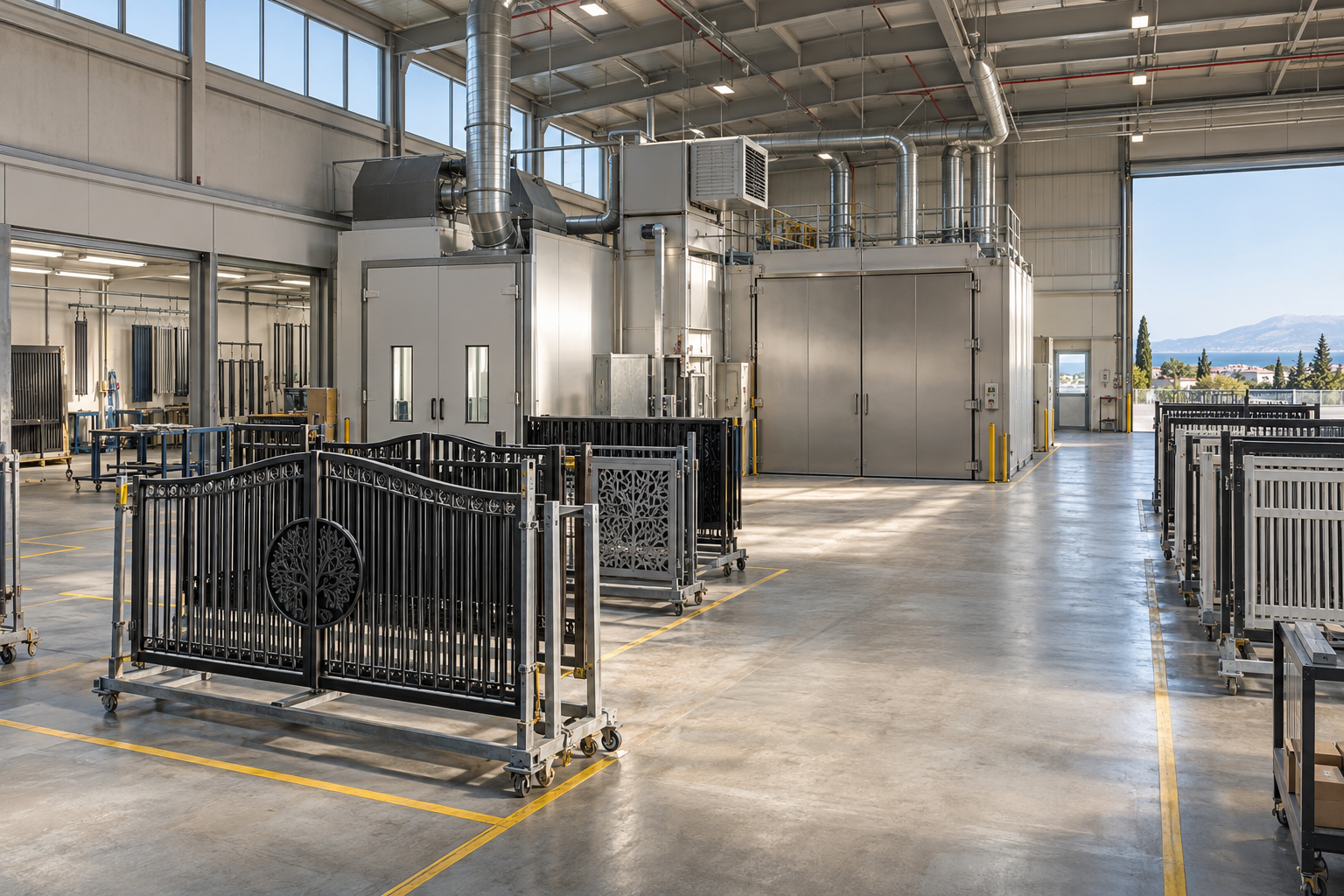
A trade powder coating centre could work if fabricators need larger component capacity or more dependable finishing schedules. Potential work includes gates, railings, screens and newly fabricated assemblies.
The distinguishing feature would be documented preparation, consistent coating and an oven sized around confirmed orders. Ask workshops about component dimensions, current lead times and work sent elsewhere before specifying equipment.
Charge by batch, surface area and preparation requirements, supported by minimum order fees. Oversized pieces and genuinely urgent turnaround may justify premiums. Colour batching helps reduce cleaning, changeovers and wasted production time.
Estimated stabilised EBITDA screening margin: roughly 10% to 20%. Energy, labour, consumables, premises overhead and routine maintenance must be covered. Poor loading efficiency and rework can quickly erode returns.
Could blast cleaning and protective coating support contractors?
An enclosed blasting and coating workshop could serve fabricators whose projects require controlled preparation and inspection records. New structural steel, exterior stairs and coastal-project metalwork are potential workloads.
Quote preparation and coating separately. Difficult geometries, additional layers and inspection documentation should be visible in the price rather than absorbed informally.
The site needs appropriate containment, extraction and separation between dusty preparation and clean coating areas. Drying and curing space can constrain throughput just as much as the application equipment.
Estimated stabilised EBITDA screening margin: roughly 10% to 18%. Abrasive use, waste handling, drying time and rework are major variables. Repeat fabrication contracts and disciplined job costing would be central to viability.
Could stainless steel treatment become a specialist niche?
Stainless steel pickling, passivation and weld finishing could serve fabricators needing controlled post-weld treatment for newly manufactured components. Commercial kitchens, food businesses and coastal properties are potential customer markets.
Demand must be checked by stainless grade, component size and required finish. Mechanical weld finishing, pickling and passivation are distinct services, so treatment routes should follow the material and customer specification.
Start with a tightly defined component range. Minimum batch charges and repeat finishing packages can help cover specialist labour, chemical management and documentation.
Estimated stabilised EBITDA screening margin: roughly 12% to 22%. This assumes adequate specialist work and fully costed safety measures, waste treatment and operating overhead. Chemical containment and competent process design are essential, not optional upgrades.
Could short-run aluminium anodising attract regional customers?
Short-run anodising could work as a specialist regional service, but it is the most demand-sensitive proposal here. Possible customers include suppliers of machined parts, fittings, signage components and specialist aluminium products.
The aim would not be to compete automatically with established architectural-profile finishers. It would be to identify compatible small batches that customers struggle to place economically.
Tank dimensions, alloy compatibility, colour expectations and throughput must be established before equipment selection. Electricity, water chemistry and effluent treatment make this a higher-capital option.
Estimated stabilised EBITDA screening margin: roughly 10% to 20%, with losses possible at low utilisation. Require anchor customers, environmental feasibility and likely business beyond Paphos before committing to this model.
What would the project actually cost?
The investment budget must cover land, the building, process infrastructure, equipment and working capital. A machinery quotation alone is not a reliable project budget.
Build the appraisal around these cost groups:
- Land and transaction costs: purchase price, applicable VAT, professional advice and due diligence.
- Building and yard: workshop construction, access, loading, storage and finished-goods protection.
- Utilities and controls: confirmed electrical capacity, ventilation, extraction, fire protection and process-specific water systems.
- Production equipment: preparation equipment, booths, ovens or tanks, handling systems and inspection tools.
- Environmental provisions: containment, wastewater arrangements, waste storage and authorised disposal.
- Start-up funding: recruitment, training, trial batches, consumables and cash tied up before customer payment.
Supplier quotations and site-specific engineering are needed before assigning a credible total capital range. For chemical-intensive processes, environmental infrastructure may materially change the economics.
The margin estimates above include normal operating overhead but exclude land purchase, financing, tax and depreciation. EBITDA also excludes amortisation. An EBITDA margin is not a return on total invested capital, and land and equipment expenditure still need funding.
What could profits look like in practice?
Illustrative profit ranges help test the model, but they are not forecasts of demand or achievable returns in Paphos. Both scenarios below assume a stabilised operation rather than its opening months.
Illustrative scenario: how might a powder coating centre perform?
A powder coating centre with estimated annual revenue of EUR 400,000 to EUR 600,000 could generate approximately EUR 40,000 to EUR 120,000 in EBITDA at the estimated 10% to 20% margin range. These are hypothetical screening assumptions, not observed local results.
Imagine several fabricators reserving regular production slots, with oversized jobs filling remaining capacity. The operator groups compatible colours and charges separately for demanding preparation.
The critical test is whether committed batches can cover the cost base without relying on constant urgent orders. Empty oven capacity, repeated colour changes and rejected finishes would weaken the case.
Illustrative scenario: how might stainless finishing perform?
A specialist stainless service with estimated annual revenue of EUR 250,000 to EUR 400,000 could generate approximately EUR 30,000 to EUR 88,000 in EBITDA at the estimated 12% to 22% margin range. These figures are also hypothetical, not a valuation or investment promise.
Imagine repeat subcontract work from kitchen and balustrade fabricators within a defined component-size range. Minimum batch fees support smaller orders, while documented handling and consistent finishes encourage repeat business.
The business becomes less attractive if incompatible jobs require frequent process changes or waste-treatment costs exceed the original assumptions. Stress-test lower volumes and slower customer payments before proceeding.
Which Anatoliko plots should investors assess?
E12, E13, E17 and E30 are available heavy/industrial-zone plots worth assessing against these concepts. Their designation is a starting point for due diligence, not confirmation that any particular finishing process is permitted.
- E12: 1,000 m2, EUR 230,000 + VAT. A candidate for powder coating, subject to fitting the required oven, preparation line, loading area and finished-goods storage. It has the lowest listed land price among this shortlist.
- E13: 1,000 m2, EUR 240,000 + VAT. Worth testing for blasting and protective coatings, with particular attention to segregated work areas, extraction and vehicle circulation.
- E17: 1,000 m2, EUR 250,000 + VAT. A candidate to assess for a focused stainless finishing operation, conditional on chemical handling, containment and waste arrangements being acceptable.
- E30: 1,000 m2, EUR 270,000 + VAT. An option to evaluate for short-run anodising only after confirming utilities, environmental feasibility and customer throughput. Its higher price does not establish greater technical suitability.
The supplied Anatoliko planning parameters are Ba5/Bd5 zoning, 80% density, 60% coverage and two floors. On a 1,000 m2 plot, these percentages imply a theoretical 800 m2 total floor area and 600 m2 footprint, before setbacks and other restrictions.
Confirm the applicable designation and allowable use for each plot. Two floors do not double the stated density allowance, and heavy process equipment may need ground-floor space. Cyprus planning, environmental and workplace requirements, together with applicable EU rules, need specialist review.
When should you combine adjacent plots?
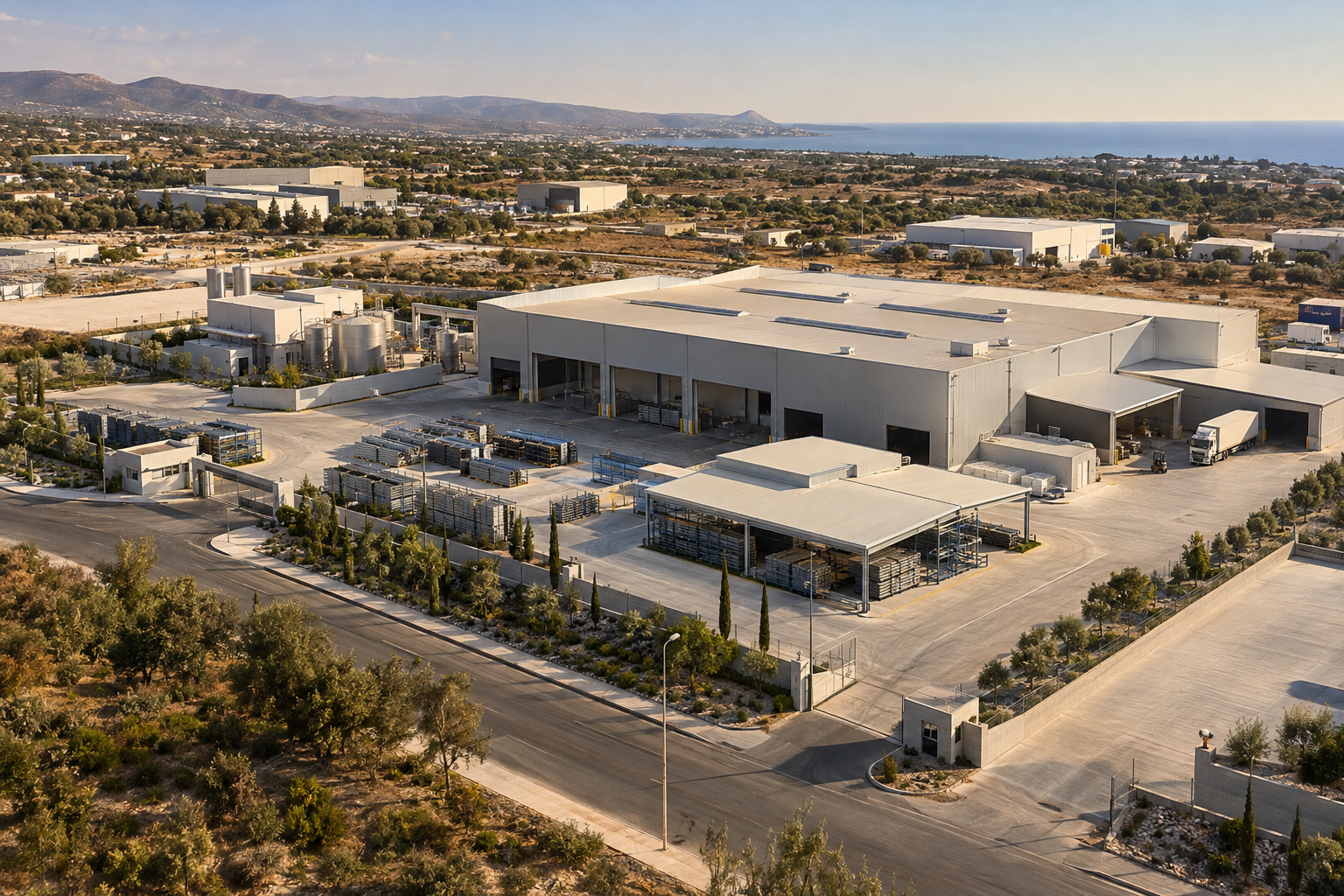
Combining adjacent plots can make sense when safe process separation and vehicle access need more space than one parcel provides. Domenica Group's plots can be combined, subject to confirming adjacency and planning arrangements.
A larger site could separate incoming metalwork, preparation, coating, curing and dispatch. It could also provide room for delivery vehicles, utilities, waste storage and future production lines without squeezing essential safety clearances.
Ask for a confirmed site plan rather than assuming consecutive plot codes are neighbours. Compare a combined-site layout with a smaller phased operation before deciding. Additional land should solve a demonstrated operational need, not substitute for evidence of demand.
What should happen before buying land or equipment?
Validate workloads, site feasibility and commercial commitments before making irreversible purchases. Ask prospective customers for representative dimensions, materials, specifications, order frequency and current outsourcing arrangements.
Then test sample quotations, realistic batch schedules and willingness to reserve capacity. Have a process engineer assess power, ventilation, water, waste and handling requirements, while qualified advisers establish the relevant approval pathway. Model reduced utilisation as carefully as the preferred case.
Paphos does not need to make every metal component to earn more from it. A focused finishing business could capture value through reliable preparation, protection and documentation, provided customers and site conditions support the plan.
Share your details, intended process and space requirements with a Domenica Group specialist for a tailored quotation and offer on suitable freehold plots in Anatoliko, Paphos, Cyprus, including combined-plot options where appropriate.
Plots that fit this idea
Frequently asked questions
Could Paphos support a metal finishing industrial hub?
Potentially, if fabricators, contractors and hospitality suppliers can provide enough compatible repeat work. The proposed gaps are not verified market absences. Check existing capacity, outsourced workloads, specifications and customer commitments before investing.
Which metal finishing business should an investor assess first?
Trade powder coating or enclosed blasting and protective coating may offer practical starting points when supported by repeat fabrication orders. Stainless treatment needs specialist chemical controls, while anodising is more capital-intensive and particularly dependent on confirmed throughput.
What profit margins could a metal finishing business achieve?
Preliminary estimated stabilised EBITDA screening ranges are roughly 10% to 20% for powder coating, 10% to 18% for blasting and protective coatings, 12% to 22% for stainless treatment and 10% to 20% for anodising. These are assumptions, not verified Paphos results or guarantees. They exclude land purchase, financing, tax, depreciation and amortisation.
Does heavy industrial zoning automatically allow coating or chemical treatment?
No. Each process needs a site-specific review of permitted use, utilities, emissions, wastewater, waste handling, fire protection and workplace safety. Confirm the applicable Cyprus approvals and EU requirements with qualified advisers before purchasing land or equipment.
Which freehold plots in Anatoliko are worth assessing for metal finishing?
The shortlist includes available heavy/industrial-zone plots E12 at EUR 230,000 + VAT, E13 at EUR 240,000 + VAT, E17 at EUR 250,000 + VAT and E30 at EUR 270,000 + VAT. Each is 1,000 m2. Technical suitability must be verified, and adjacent plots may be combined after confirming the site plan and planning arrangements.