How to Launch Short-Run Packaging Production in Paphos
What is the opportunity for short-run packaging in Paphos?
The opportunity is local manufacturing in manageable quantities, not another warehouse selling standard packaging. A short-run hub in Paphos, Cyprus, could produce custom boxes, roll labels, protective inserts and export crates for businesses that cannot justify large factory orders.
Think of a winery introducing a gift pack, an online retailer shipping an awkward product, or an equipment supplier preparing a fragile machine for export. They may need packaging designed around the item, without committing cash and storage space to a long production run.
That does not prove an unmet market exists. These are potential service gaps, not verified absences. No current supplier audit has been completed for this article, so the concepts below are investment hypotheses, not findings about missing services in Paphos.
The strongest proposition would combine design, prototyping, local production and dependable reordering. Customers would pay for fit and responsiveness, not simply for cardboard or timber.
What should investors check before calling this a market gap?
Investors should compare local manufacturers, distributors and suppliers delivering into Paphos before committing to equipment or land development. A distributor with a capable production partner elsewhere in Cyprus may already solve the customer's problem.
A practical service audit should include:
- Paphos packaging suppliers and printers, including specialist roll-label capabilities.
- Corrugated converters and packaging manufacturers elsewhere in Cyprus that deliver west.
- Timber workshops, export packers and freight forwarders serving Paphos businesses.
- Overseas suppliers where delivered cost and lead time remain competitive.
Request comparable quotations for actual customer specifications. Record minimum quantities, tooling charges, delivery schedules, repeat-order terms, materials and technical support. Check delivered performance, not just advertised services.
Then ask prospective customers for recent purchasing examples and permission to quote their next order. A credible opening exists only where buyers will switch, pay appropriately and reorder. If established suppliers already perform well, partnership or subcontract production may be smarter than direct competition.
Why consider Paphos and Anatoliko now?
Paphos is worth investigating because a nearby production base could simplify sampling, collection and replenishment for western Cyprus businesses. The timing should depend on confirmed purchasing needs, not an unsupported claim of a packaging boom.
Potential customers include wineries, artisan producers, online retailers, cosmetics businesses and equipment distributors. Their requirements differ, but frequent product changes and limited storage can make smaller orders attractive.
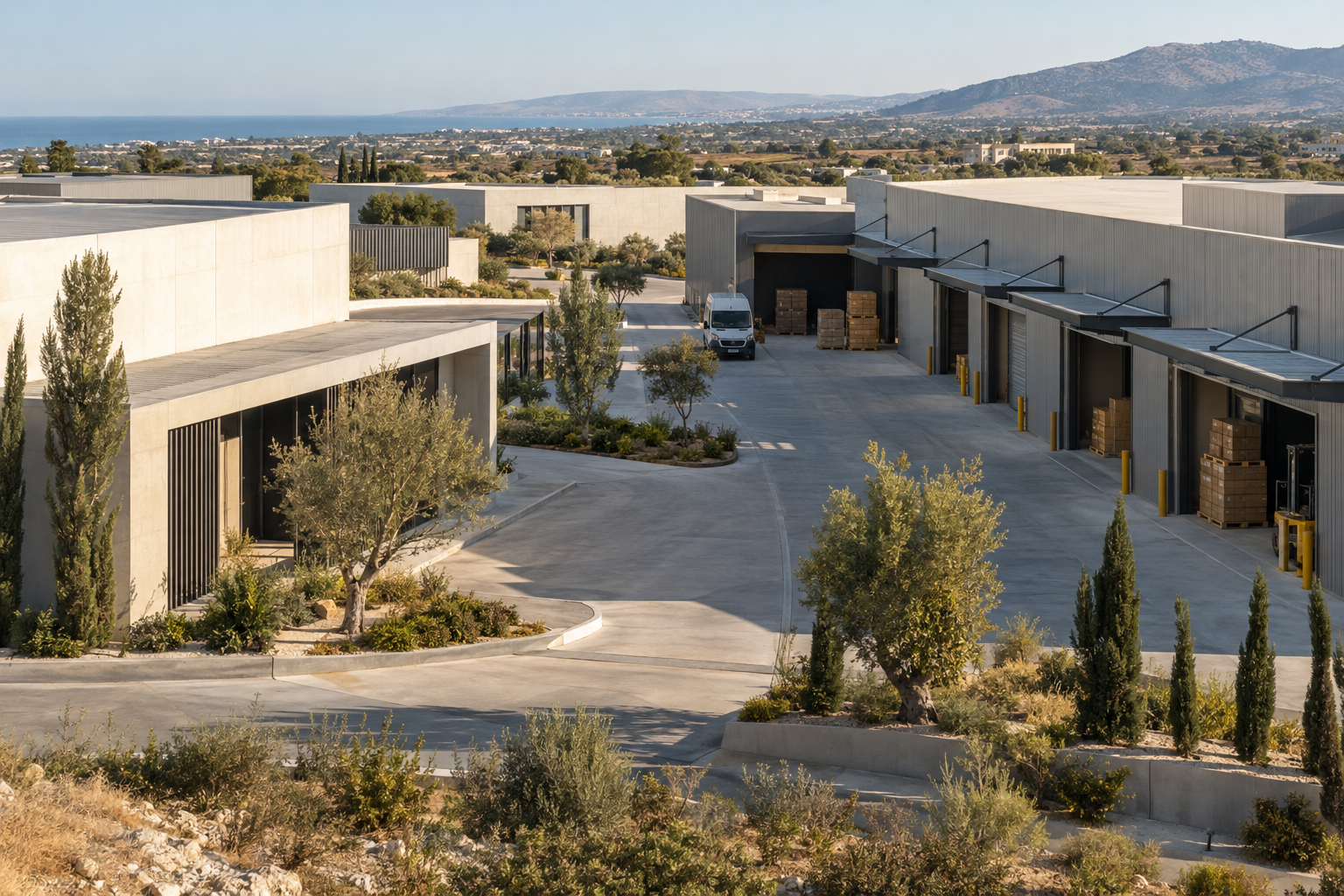
Domenica Group's freehold industrial plots in Anatoliko are positioned approximately 1 minute from the Limassol to Paphos highway, 10 minutes from Paphos airport and 5 minutes from Paphos, with journey times dependent on route and traffic. Highway access could support deliveries across western Cyprus and inbound materials from other production centres. Airport proximity may help business access, although packaging freight economics must be assessed separately.
Cyprus's EU setting also makes packaging specifications and documentation important. Buyers need suitable materials and reliable records, not broad claims that every paper-based product is automatically compliant or sustainable.
Which production services could form the hub?
Four complementary services could form the hub, but each needs its own demand test and operating plan. Starting with one or two compatible processes would limit capital exposure.
Could short-run corrugated box conversion work?
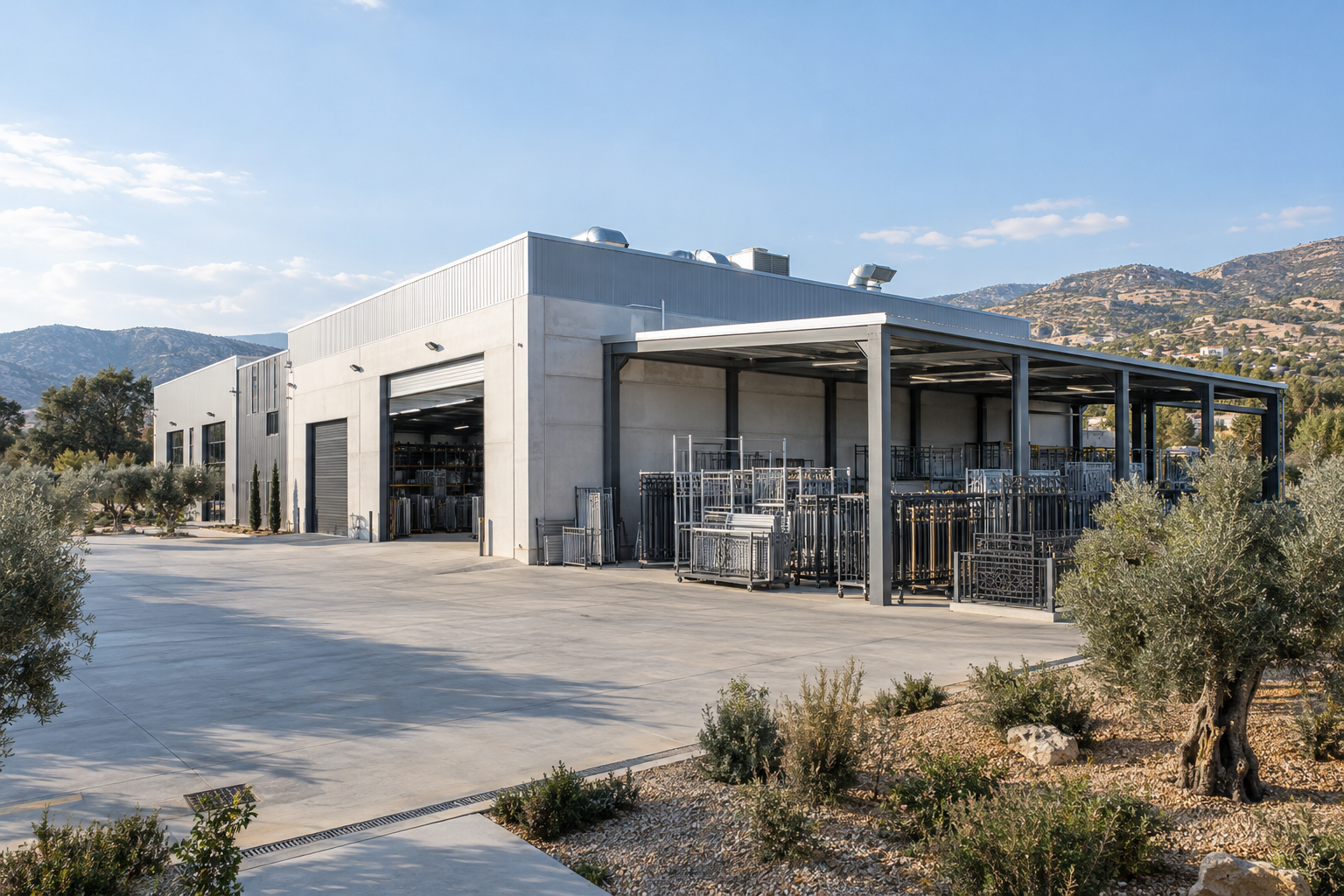
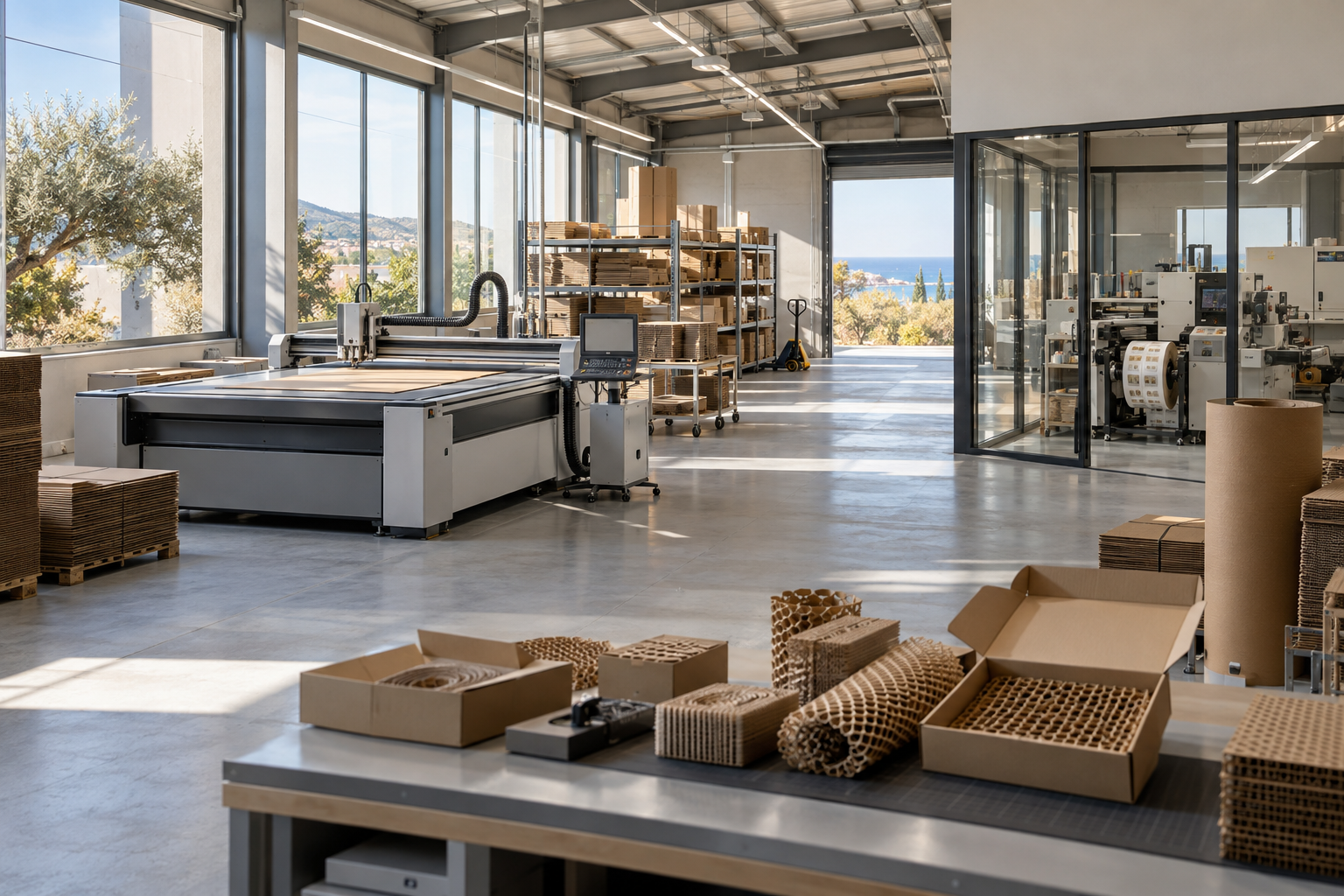
A converter could buy corrugated sheets and cut, crease and print them locally, avoiding the investment required to manufacture cardboard itself. The target would be custom dimensions and modest repeat quantities rather than commodity stock cartons.
Wineries, spare-parts suppliers and online retailers are potential buyers. Standard sheet grades, reusable designs and separately charged setup work would help control waste and changeover costs. Recurring accounts should come before a larger building.
Could specialist digital labels offer recurring revenue?
Digital roll-label production could serve customers needing moisture-resistant materials, batch numbering, variable data and dependable small-run reordering. Basic sticker printing alone may offer little differentiation from existing printers.
The technical work includes matching adhesives and face materials to storage conditions, containers and application equipment. Artwork checks and variable-data verification matter too. Customers remain responsible for approving legally compliant content, with specialist advice where necessary, including relevant food, cosmetics or chemical requirements.
Could paper-based inserts improve product protection?
Custom corrugated or paper-honeycomb inserts could help customers protect irregular products without relying on oversized cartons and loose filler. Ceramics makers, wine gift suppliers and lighting businesses are useful prospects to investigate.
Design and prototypes should be charged separately from production. Shared sheet storage and digital cutting equipment could reduce duplicated investment with box conversion. Trial shipments must demonstrate suitable protection and packing performance before environmental or damage-reduction claims are made.
Could timber crating serve export customers?
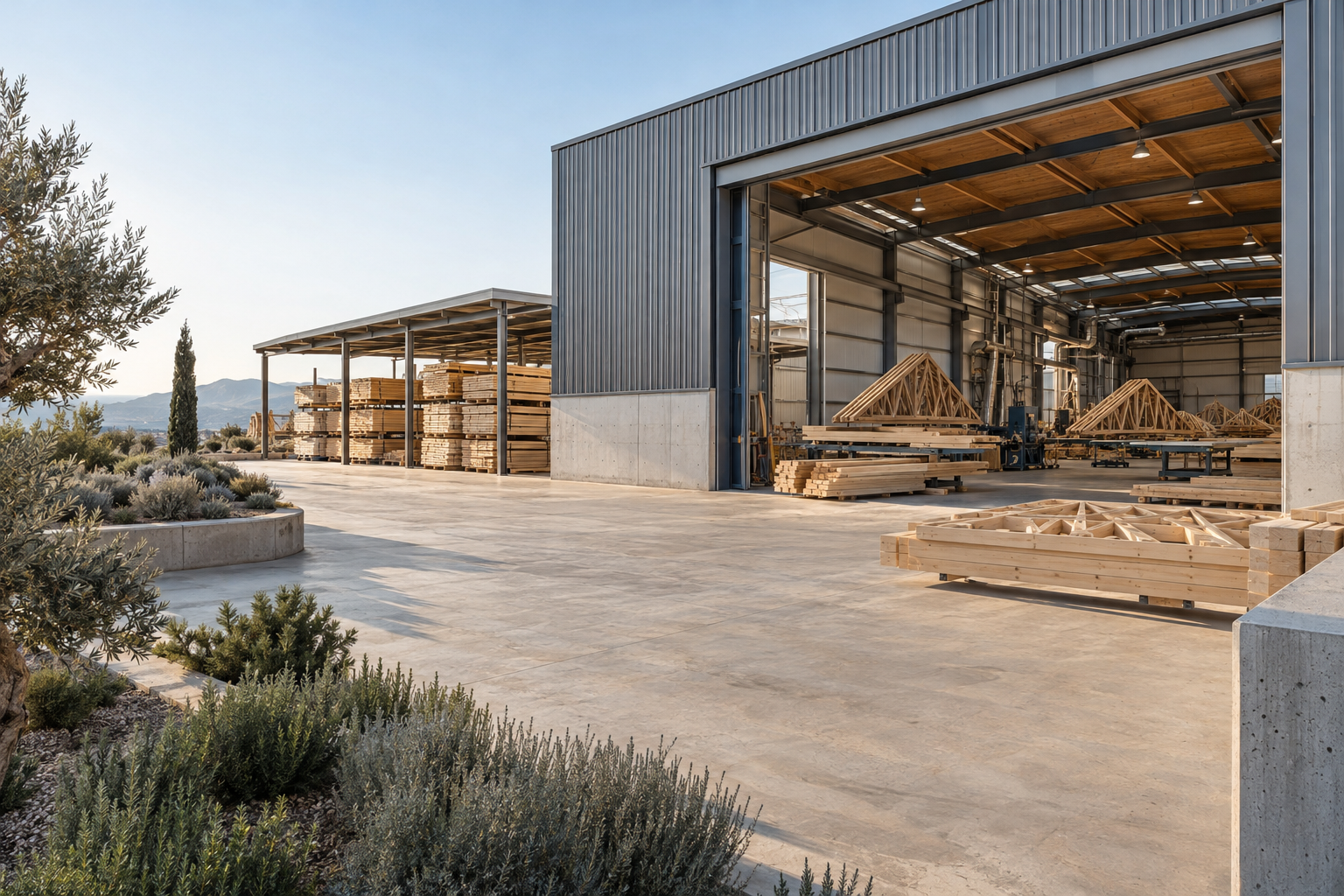
Industrial crating could combine measurement, structural design, moisture protection and loading preparation for machinery and valuable goods. General carpenters and removal companies may already provide parts of this service, so technical capability and turnaround need careful comparison.
Freight-forwarder relationships could generate referrals and recurring equipment work. Where destination rules require ISPM 15 compliance, use appropriately authorised treatment and marking arrangements. Buying timber alone does not establish compliant export packaging.
What might the gross profit look like?
Illustrative gross margin targets range from 25% to 55% across these services, but they are estimates, not verified Paphos trading results or forecasts. Actual performance depends on purchasing terms, production speed, waste, labour and achievable selling prices.
For comparison, assume an illustrative monthly sales range of EUR 10,000 to EUR 15,000 per service. This is a modelling assumption, not evidence of available demand:
- Box conversion: Estimated gross margin target of 25% to 40%, giving approximately EUR 2,500 to EUR 6,000 gross profit across the assumed sales range.
- Digital labels: Estimated gross margin target of 35% to 55%, giving approximately EUR 3,500 to EUR 8,250 gross profit.
- Protective inserts: Estimated gross margin target of 30% to 45%, giving approximately EUR 3,000 to EUR 6,750 gross profit.
- Timber crating: Estimated gross margin target of 25% to 40%, giving approximately EUR 2,500 to EUR 6,000 gross profit.
These examples deduct direct production costs, including materials and direct labour, but exclude premises costs, equipment finance, administration, other fixed overheads and tax. They are not net profit or a return on land investment. Shared costs must be allocated consistently rather than omitted or counted twice.
Design fees, setup charges and repeat orders should each be modelled separately. Stress-test slower utilisation, rejected output and late customer payments before accepting the investment case.
How could customers use the hub in practice?
Customers could use the hub to develop packaging and replenish it in stages, provided the service beats existing alternatives on total value. The following are illustrative scenarios, not real customer case studies.
Illustrative scenario: A winery's seasonal gift range
A western Cyprus winery wants a mixed-bottle gift pack but does not want a large stock of season-specific packaging. The hub develops a corrugated outer box, tests a protective insert and produces compatible short-run labels.
The winery pays for development and approves samples before production. Repeat batches use the same structural design, while labels change by range or season. The commercial test is whether delivered cost, protection and replenishment justify switching from its current suppliers.
Illustrative scenario: An equipment distributor's export shipment
A Paphos equipment distributor needs a fitted crate and documented packing arrangements for a sensitive machine. The crating operator measures the equipment, agrees handling requirements with the freight forwarder and specifies moisture protection appropriate to the journey.
Treatment and marking requirements are checked against the destination before dispatch. One successful job would not justify expansion, but a recurring account with agreed specifications could support a dedicated assembly area.
Which Anatoliko plots could fit each packaging idea?
Five available Domenica Group plots offer useful starting points for feasibility discussions, although none should be treated as automatically approved for a particular process. The supplied estate parameters are Ba5/Bd5 zoning, 80% building density, 60% coverage and 2 floors, subject to plot-specific confirmation and approvals.
- E55a | 600 m² | EUR 150,000 + VAT | Light industrial/commercial: A candidate for a compact digital-label operation, with artwork preparation, controlled material storage and finishing space. Machine layout and permitted use need checking.
- E36 | 1,042 m² | EUR 219,000 + VAT | Light industrial/commercial: Worth assessing for protective inserts and prototyping, potentially alongside compatible box-conversion processes where permitted. Sheet storage and finished-goods handling will influence the layout.
- E12 | 1,000 m² | EUR 230,000 + VAT | Heavy/industrial: A candidate for corrugated box conversion, with space planning centred on sheet delivery, cutting, creasing and dispatch. Power supply and fire provisions require technical assessment.
- E13 | 1,000 m² | EUR 240,000 + VAT | Heavy/industrial: Worth investigating for timber crating and export packing. Covered assembly, dust extraction, noise control and vehicle movement are key feasibility questions.
- E42 | 1,250 m² | EUR 263,000 + VAT | Light industrial/commercial: A larger candidate for compatible separate production units and shared facilities, subject to approved uses and sufficient circulation space.
All five are listed as available in the supplied inventory; reconfirm availability before proceeding. Coverage and density are not guarantees of usable workshop space. Setbacks, parking, loading, fire access and storage requirements affect what can actually be developed.
Could combining adjacent plots create a stronger hub?
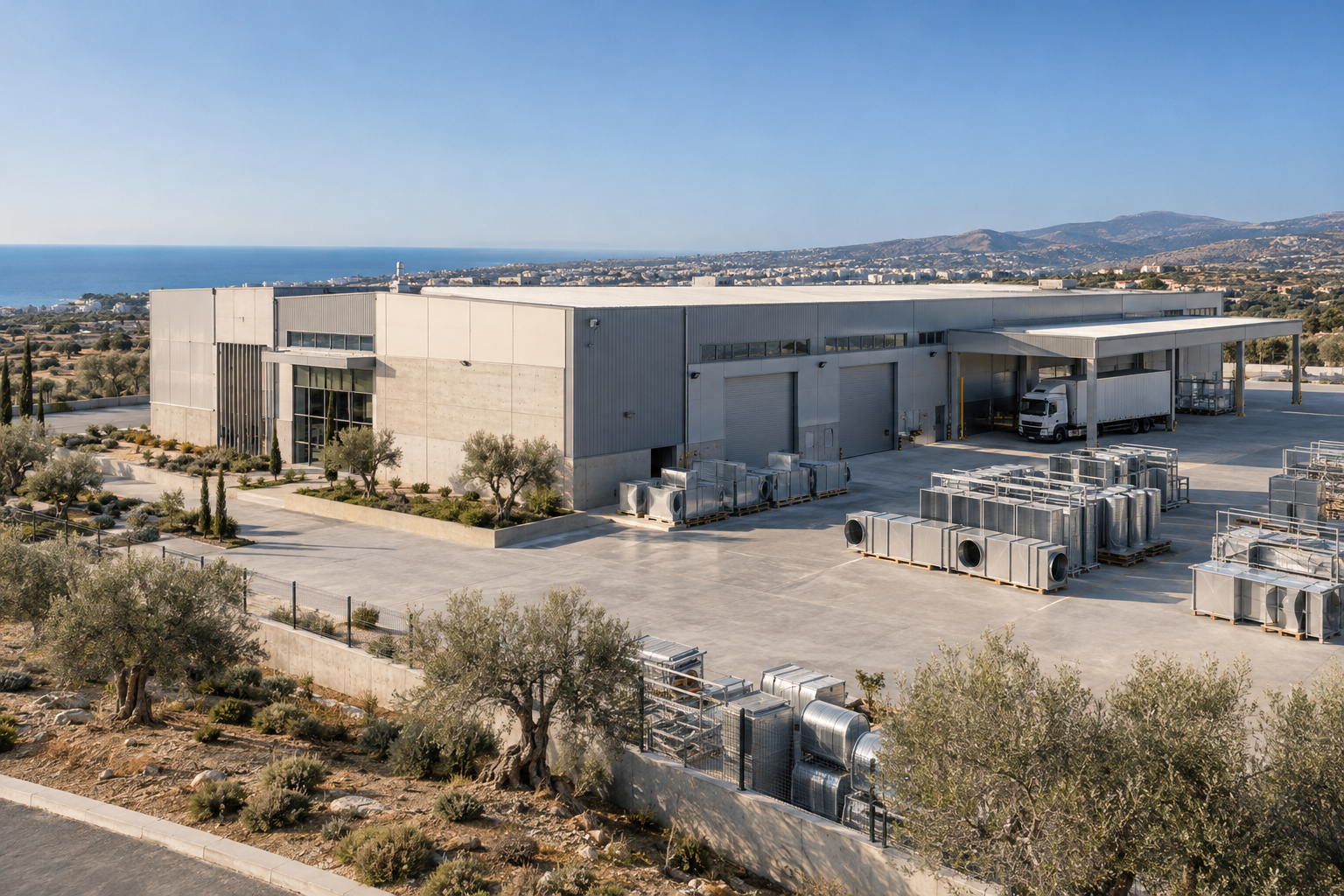
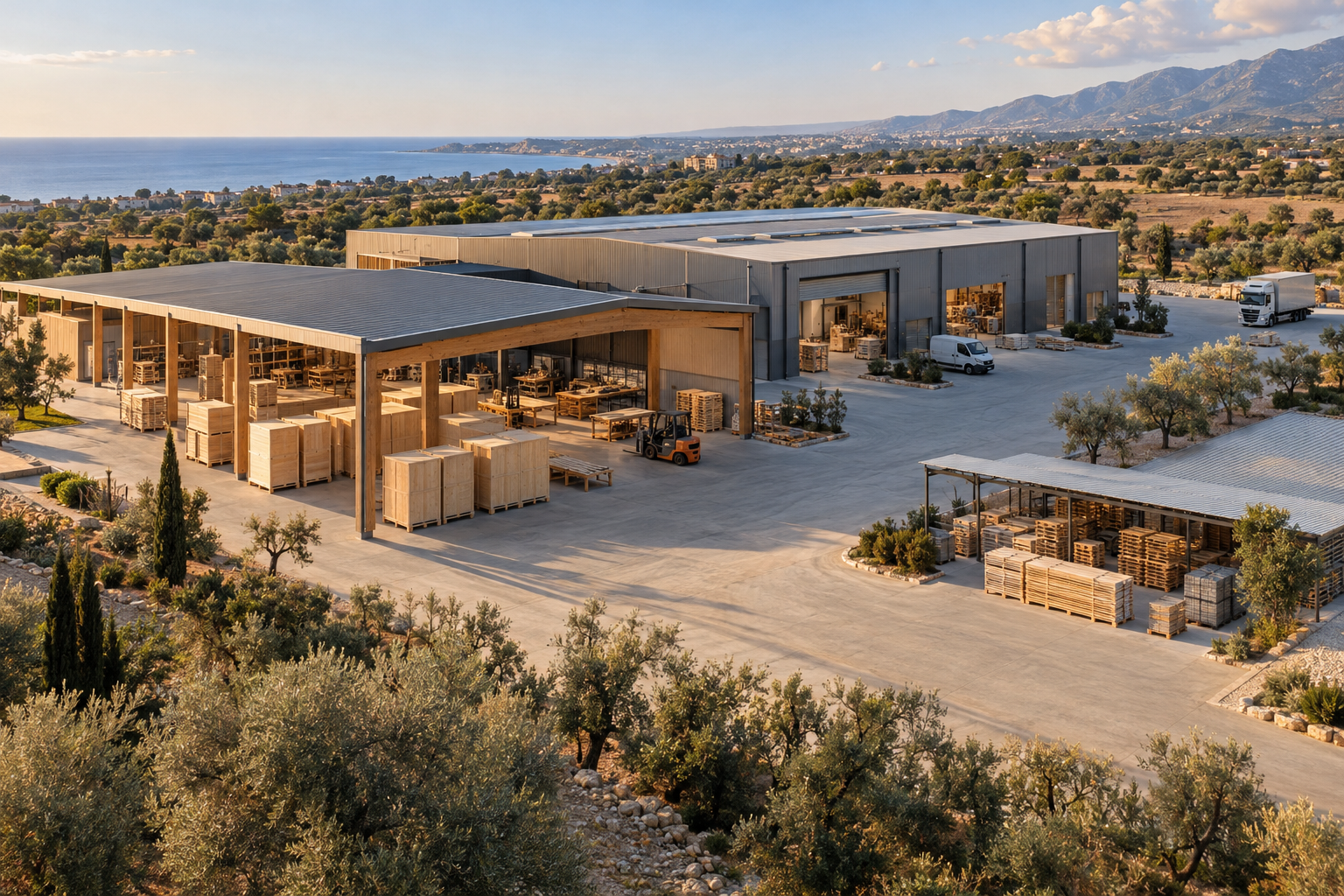
Combining adjacent plots could support a more practical multi-operator hub, provided adjacency, availability and planning arrangements are confirmed. Do not assume neighbouring plot codes establish physical adjacency.
A larger site could accommodate:
- Shared loading and dispatch areas with safer vehicle circulation.
- Covered sheet-material storage and secure finished-goods holding.
- Separate production units for different operators or processes.
- Future workshop space reserved for contracted expansion.
Separation matters. Timber dust should not compromise label finishing, and paper storage requires appropriate fire precautions. Shared facilities also need clear agreements on access, maintenance, insurance and cost allocation.
The sensible upsell is room for a proven next phase, not maximum land acquisition on day one. Ask Domenica Group to identify adjoining options around the preferred plot and obtain a site layout before deciding how much land the business needs.
What is the sensible next step?
The next step is to connect verified customer demand with a technically feasible site and a conservative financial model. Complete the supplier audit, secure paid trials, and seek recurring orders with clear specifications before committing to major construction or equipment.
A short-run packaging hub could become a useful production partner for Paphos and western Cyprus. Its strength would come from making the right quantities reliably, not from assuming local competition is absent.
Share your intended processes, space requirements, budget and expansion plans with a Domenica Group specialist. They can help you explore suitable freehold plots in Anatoliko, assess combination options and prepare a tailored quotation and offer for your project.
Plots that fit this idea
Frequently asked questions
Is there a confirmed shortage of short-run packaging manufacturers in Paphos?
No shortage has been verified for this article. Investors should check Paphos manufacturers, printers and distributors, plus suppliers delivering from elsewhere in Cyprus or overseas, before treating any service as an established market gap.
Would a short-run box workshop need to manufacture cardboard?
No. A corrugated box converter can buy sheets and cut, crease and print them locally. This avoids cardboard manufacturing itself, although equipment, storage, skilled operation and sufficient repeat demand are still required.
Which Anatoliko plots could suit a packaging business?
Candidates include E55a for compact label production, E36 for inserts and prototyping, E12 for box conversion, E13 for timber crating and E42 for a larger compatible multi-unit concept. These are feasibility suggestions, not confirmations of permitted use. Prices, availability and planning suitability should be checked before commitment.
What profit margins could short-run packaging production achieve?
Illustrative gross margin targets are 25% to 40% for box conversion and crating, 30% to 45% for protective inserts, and 35% to 55% for digital labels. These are estimates rather than verified local results, and exclude premises costs, finance, administration, other fixed overheads and tax.
Can industrial plots in Anatoliko be combined for a packaging hub?
Plots can be combined, subject to confirming adjacency, availability and the necessary approvals. A larger site could provide shared loading, material storage and separate production units, but its layout must address fire access, vehicle circulation and separation of incompatible processes.