Could Paphos Support a Solar Service and Manufacturing Hub?
What is the opportunity beyond solar installation?
The opportunity is to build a permanent industrial base that keeps solar equipment working and makes installation projects easier to deliver. In Paphos, Cyprus, that could mean repairing inverters, fabricating solar carport structures, assembling electrical kits or testing panels removed during upgrades.
For installers, the appeal is practical: less repetitive assembly, clearer fault diagnosis and potentially shorter turnaround times. Hotels and commercial property owners may value having a nearby service partner when equipment problems interrupt generation or a parking-area project needs a tailored structure.
These are opportunities to investigate, not confirmed gaps in Paphos. Existing installers, distributors, metalworkers and repair specialists may already cover some or all of this demand. A new operation needs a defensible service advantage, not simply a workshop with solar branding.
The strongest industrial land story is therefore a business with repeat customers, documented processes and room to grow. Start with one service that customers will pay for, then consider complementary activities.
Why investigate Paphos now?
Paphos is worth investigating because solar equipment creates work throughout its operating life, not only when it is first installed. Faults, upgrades, replacement parts and new parking structures can generate different types of demand, although their local volume remains unverified.
Installers are a useful starting point because they can reveal recurring problems across multiple properties. Hotels, facilities managers and commercial property owners can explain what delays actually cost them and which service commitments matter.
Anatoliko offers a location to assess for this type of operation. Domenica Group's freehold industrial plots have indicative journey times of 1 minute to the Limassol to Paphos highway, 10 minutes to Paphos airport and 5 minutes to Paphos, depending on traffic and the destination.
Road access could support collections and deliveries across the district. However, location cannot compensate for insufficient repair volumes, unavailable components or customers unwilling to pay for specialist work.
Which solar businesses could use a permanent workshop?
Four activities merit investigation, with each requiring a different combination of technical capability, customer demand and premises.
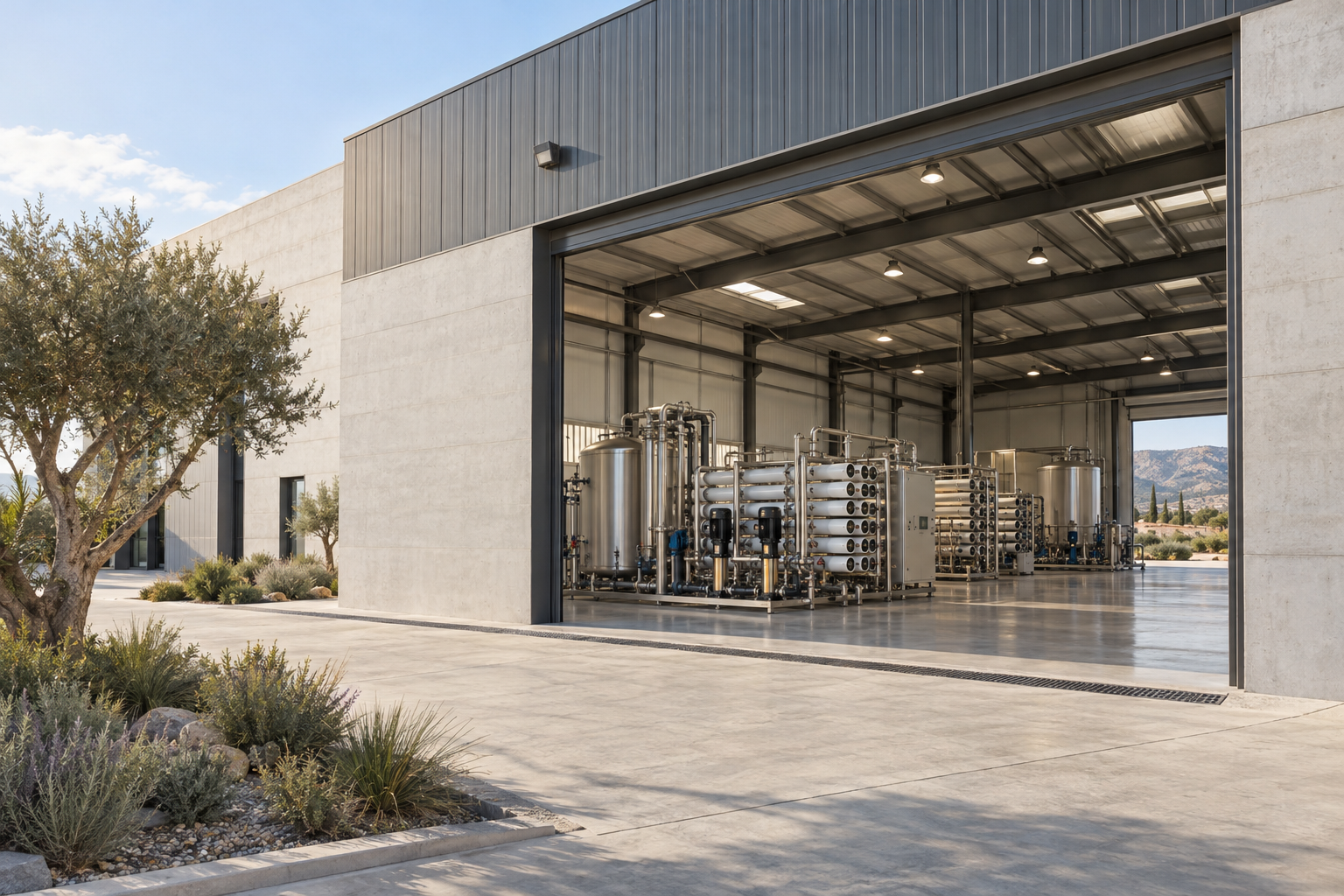
Could inverter diagnostics and repair work locally?
An inverter workshop could serve installers with out-of-warranty units that are economically repairable. First establish whether local companies currently send equipment elsewhere, use existing repair partners or replace units because repair is impractical.
A credible offer would include paid diagnostics, transparent repair decisions and documented post-repair testing. Qualified technicians, safe isolation procedures, suitable test equipment and reliable access to parts are essential. Manufacturer restrictions and warranty terms also need checking.
Estimated planning assumptions: charge approximately €200 to €700 for an economically repairable unit, targeting a gross margin of roughly 30% to 50% after parts and direct labour. Diagnostics should be charged separately when customers decline repairs.
For illustration, an estimated €400 repair invoice with €240 in parts and direct labour leaves €160 gross profit, or 40%. That is not net profit: premises, specialist equipment, insurance, warranty claims and tax remain outside this calculation.
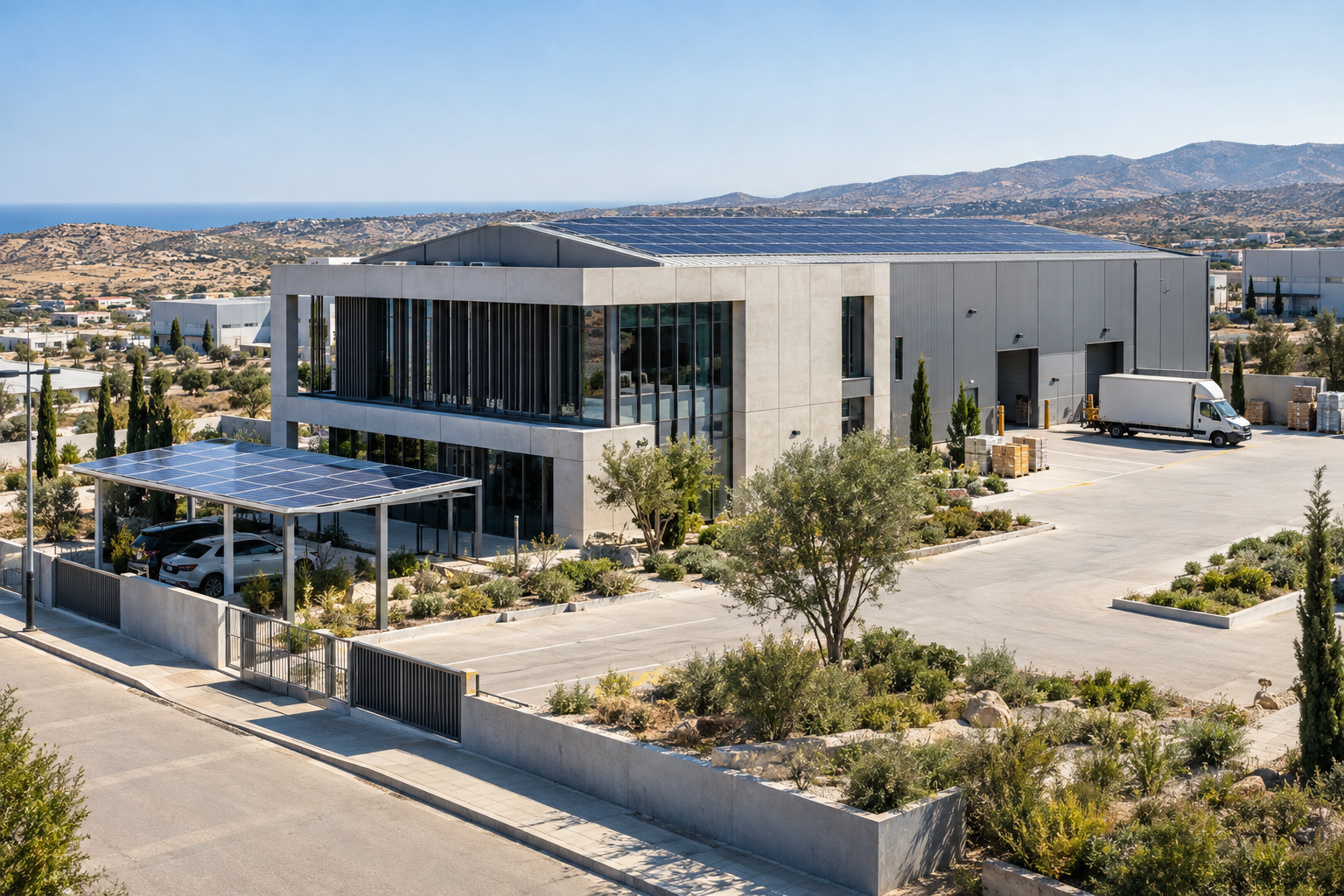
Could a Paphos workshop fabricate solar carports?
A fabrication business could supply engineered structural packages for hotel, office and retail parking areas. The question is whether buyers need locally tailored structures that existing suppliers cannot provide competitively within acceptable lead times.
The workshop would need fabrication bays, metal stock storage and safe loading space. Structural design, wind loading, corrosion protection and site-specific foundations require professional attention. Licensed solar contractors can handle the electrical installation while the workshop focuses on structural packages.
Estimated planning assumptions: target approximately 15% to 30% gross margin after materials, direct labour and outsourced finishing. Repeatable designs and repeat orders would help control costs.
Quote engineering, foundations, transport and installation explicitly. Treating these as incidental extras can turn an apparently attractive fabrication order into a loss.
Could preassembled electrical kits save installers time?
Electrical kits could reduce repetitive site work if installers consistently order compatible, standardised products. Potential lines include labelled cable sets, cable harnesses and compliant combiner or protection assemblies.
Begin with a limited product range developed around actual installer requirements. Every additional variation creates purchasing, assembly and testing complexity.
Estimated planning assumptions: target gross margins of around 20% to 35% after components, direct assembly labour and routine testing. Purchasing terms, order consistency and controlled customisation will influence results.
Allow separately for product conformity work, traceability, liability insurance, premises and working capital. Depending on the product and the business's role, applicable Cyprus and EU requirements may create manufacturer responsibilities. Obtain specialist advice rather than assuming compliant components automatically produce a compliant assembly.
Could used-panel testing become a viable service?
Panel testing could help owners distinguish reusable equipment from panels requiring authorised disposal. Its viability depends on securing incoming batches and identifying customers who accept tested used equipment for suitable applications.
A service might combine visual inspection, electrical safety checks and performance grading, with serial-number records and clear limits on what each test establishes. A basic inspection should not be presented as a comprehensive performance certification.
Estimated planning assumptions: batch testing might command approximately €15 to €40 per panel, depending on scope and volume, with a target service gross margin of 25% to 45% after direct labour and consumables.
Budget separately for equipment, breakage, warranty exposure and authorised disposal. Resale income is uncertain because new-panel prices can undermine used-stock economics. Confirm when incoming panels legally constitute waste and which transport, storage, treatment or reuse permissions apply.
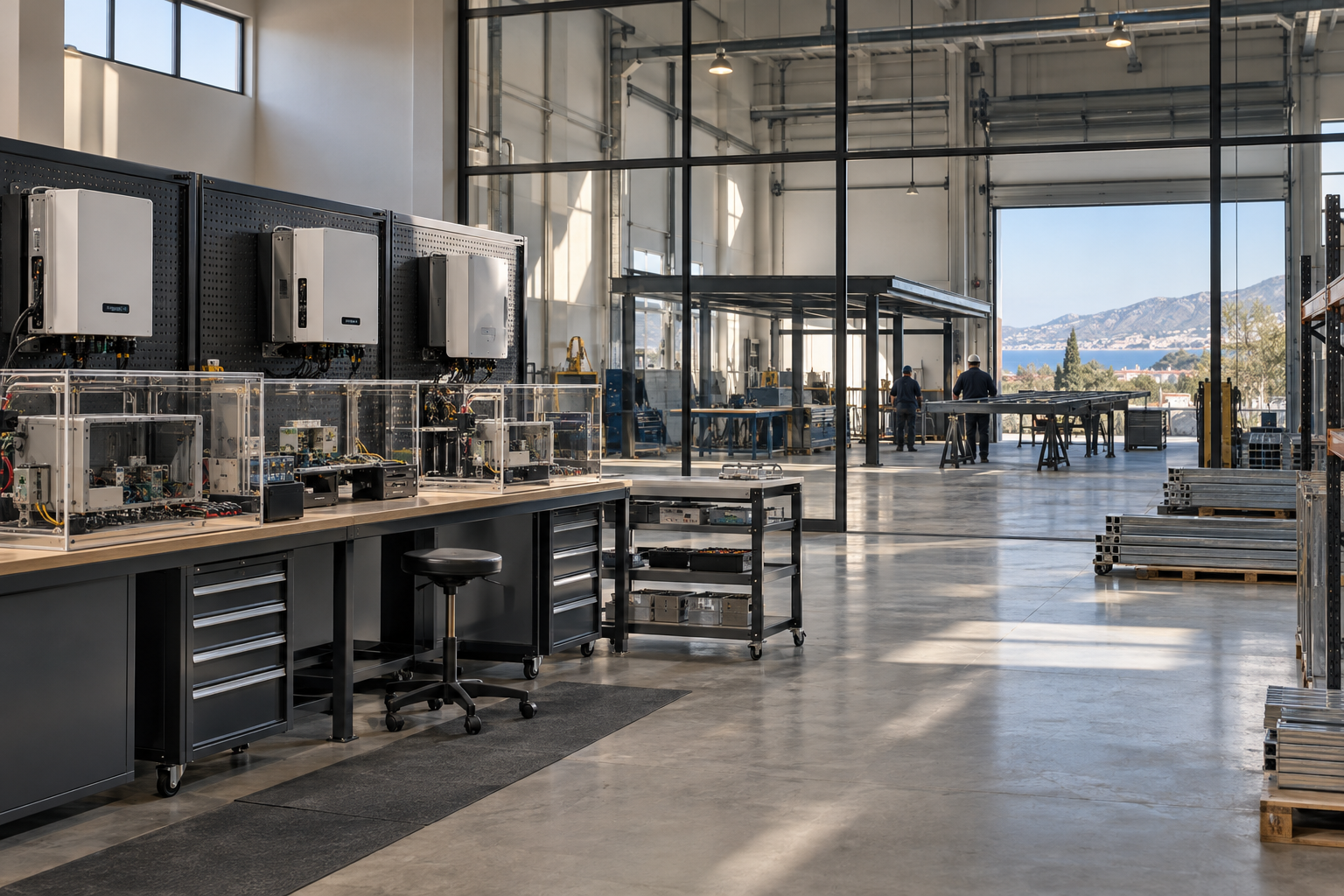
What could these businesses look like in practice?
A focused pilot could reveal whether customers value the service before a business commits to buying land. These are illustrative scenarios, not reports of existing Paphos businesses or proven demand.
What might an installer-led repair pilot show?
An illustrative inverter pilot could test whether recurring faults generate enough paid work. A workshop agrees diagnostic terms with several installers, records repairability and parts delays, and tracks the time spent on every unit. Repeat orders and acceptable warranty outcomes would provide stronger evidence than expressions of interest alone.
What might a hotel carport pilot show?
An illustrative carport pilot could test whether tailored fabrication solves a genuine procurement problem. A hotel asks for a structure suited to an awkward parking layout. The fabricator works with an engineer and licensed solar contractor, then compares the full delivered cost and programme against competing offers. The lesson is whether customisation earns a margin rather than merely adding complexity.
What should buyers validate before purchasing land?
Buyers should validate competitors, achievable volumes and customer commitments before choosing a plot. A useful feasibility exercise should cover:
- Existing supply: map Paphos and wider Cyprus repairers, fabricators, distributors and testing providers, including collection services from outside the district.
- Actual volumes: request anonymised fault histories, upgrade schedules, purchasing records or recurring fabrication requirements.
- Willingness to pay: test diagnostic charges, delivery costs, turnaround promises and warranty terms through paid pilots.
- Customer commitments: seek trial orders, service agreements or written purchasing intentions with realistic quantities.
- Operating capability: verify technician availability, parts access, equipment costs, insurance and compliance obligations.
- Cash flow: model stock purchases, customer payment delays and quieter periods, not just gross margins.
Land purchase should follow a credible operating plan. Where practical, testing demand through suitable existing premises or an established production partner can reduce the cost of learning.
Which Anatoliko plots could fit each idea?
Five available Domenica Group plots provide useful starting points, subject to the proposed use, approvals and technical checks. A zone description alone does not confirm permission for a particular activity or adequate electrical capacity.
- E60a | 550 m² | €138,000 + VAT: Light industrial/commercial zone. A smaller option to investigate for a focused inverter diagnostics workshop, provided benches, secure storage and delivery circulation fit comfortably.
- E23 | 1,000 m² | €210,000 + VAT: Light industrial/commercial zone. Worth assessing for inverter repair with separate intake, diagnostics, completed-unit storage and dispatch areas.
- E12 | 1,000 m² | €230,000 + VAT: Heavy/industrial zone. A candidate for solar carport fabrication, subject to permission for the processes involved and adequate loading, ventilation and noise controls.
- E36 | 1,042 m² | €219,000 + VAT: Light industrial/commercial zone. Worth investigating for electrical-kit assembly, with clean workstations, component storage and a controlled testing area.
- E42 | 1,250 m² | €263,000 + VAT: Light industrial/commercial zone. Its larger area could help separate incoming panels, testing, graded stock and dispatch, subject to applicable waste-handling permissions.
These are available listings from the supplied inventory, not technical suitability certifications. Confirm current availability and request a layout review before selecting a plot.
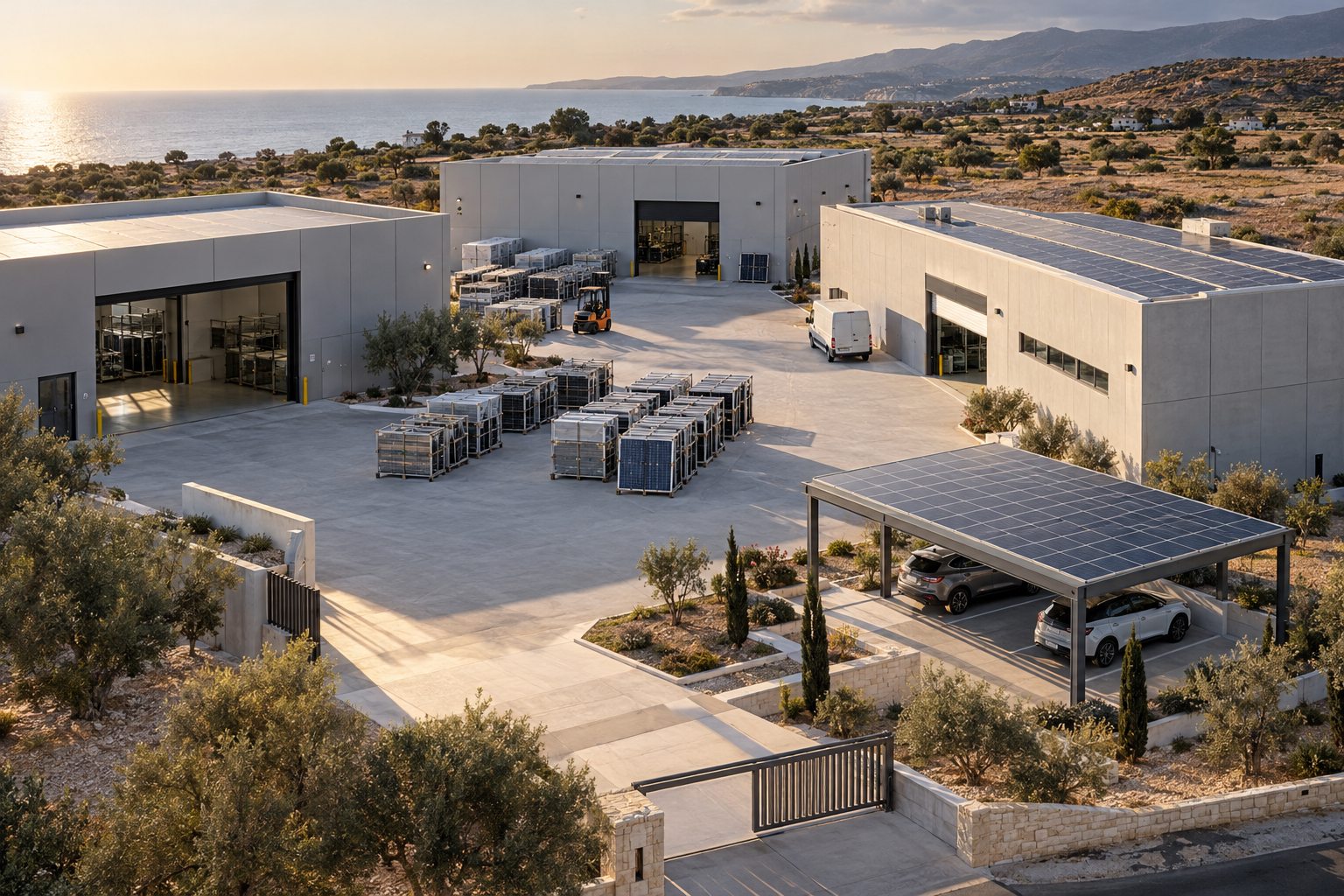
What site specifications matter most?
Electrical capacity, delivery access and separated work areas should lead the site assessment. An attractive purchase price is only part of the decision.
Ask the electricity provider and your electrical engineer to confirm available supply, connection costs, upgrade lead times and whether the intended equipment requires three-phase power. Testing systems may also have specific electrical requirements.
Check vehicle turning space, loading arrangements, door clearances and safe pedestrian access. Keep clean electronics assembly away from welding dust, grinding debris and other contamination. Incoming equipment, quarantined items and finished stock also need distinct locations.
The estate's stated planning parameters are Ba5/Bd5 zoning, 80% building density, 60% coverage and up to 2 floors. Confirm their application to the individual plot with your architect and the competent authority. Setbacks, parking, fire access and operational requirements can reduce the space practically available.
When should you consider combining adjacent plots?
Combining adjacent plots is worth exploring when a single site cannot accommodate safe separation, efficient deliveries or future expansion. A larger project could place fabrication in one building and clean testing or assembly in another, with shared administration and dispatch.
Domenica Group's plots can be combined, but confirm adjacency, availability and the necessary planning arrangements before designing a combined facility. Do not assume the shortlisted plot codes sit beside one another.
Expansion should follow evidence of demand. Additional land can support stockholding and better circulation, but it also increases capital requirements before generating revenue.
How can you take the next step?
The next step is to match a validated service concept with a technically suitable site in Anatoliko, Paphos. Prepare a brief covering expected orders, electrical loads, equipment, deliveries, staffing and the areas that must remain separate.
If you are exploring a solar service or manufacturing base in Cyprus, share your details and project requirements with a Domenica Group specialist. They can help you review available freehold plots, investigate combination options and prepare a tailored quotation and offer around the space your business actually needs.
Plots that fit this idea
Frequently asked questions
Could Paphos support a solar inverter repair business?
Potentially, but local demand is not established here. Validate out-of-warranty repair volumes, existing competitors, parts availability and installer willingness to pay. Paid diagnostic pilots and repeat service orders are stronger evidence than general interest.
Which industrial plots could suit solar-related businesses in Anatoliko?
Options to investigate include E60a and E23 for inverter diagnostics, E12 for carport fabrication, E36 for electrical-kit assembly and E42 for panel testing. All require checks on permitted use, electrical capacity, building layout and delivery access before purchase.
What gross margins might a solar equipment workshop target?
Illustrative estimates are 30% to 50% for inverter repairs, 15% to 30% for fabricated carport packages, 20% to 35% for electrical kits and 25% to 45% for panel-testing services. These are planning assumptions, not observed Paphos results or net-profit forecasts, and exclude significant overheads.
Can used solar panels be tested and resold in Cyprus?
Potentially, subject to their condition, legal status and applicable requirements. Establish whether incoming panels are products or waste, obtain any required permissions, document testing and identify appropriate reuse applications. Testing alone does not automatically authorise resale or establish a comprehensive warranty.
Can adjacent Domenica Group industrial plots be combined?
Plots can be combined for larger projects, subject to confirming adjacency, availability and planning arrangements. A combined site could provide separate fabrication, testing and storage areas, but buyers should validate demand and infrastructure before committing to additional land.