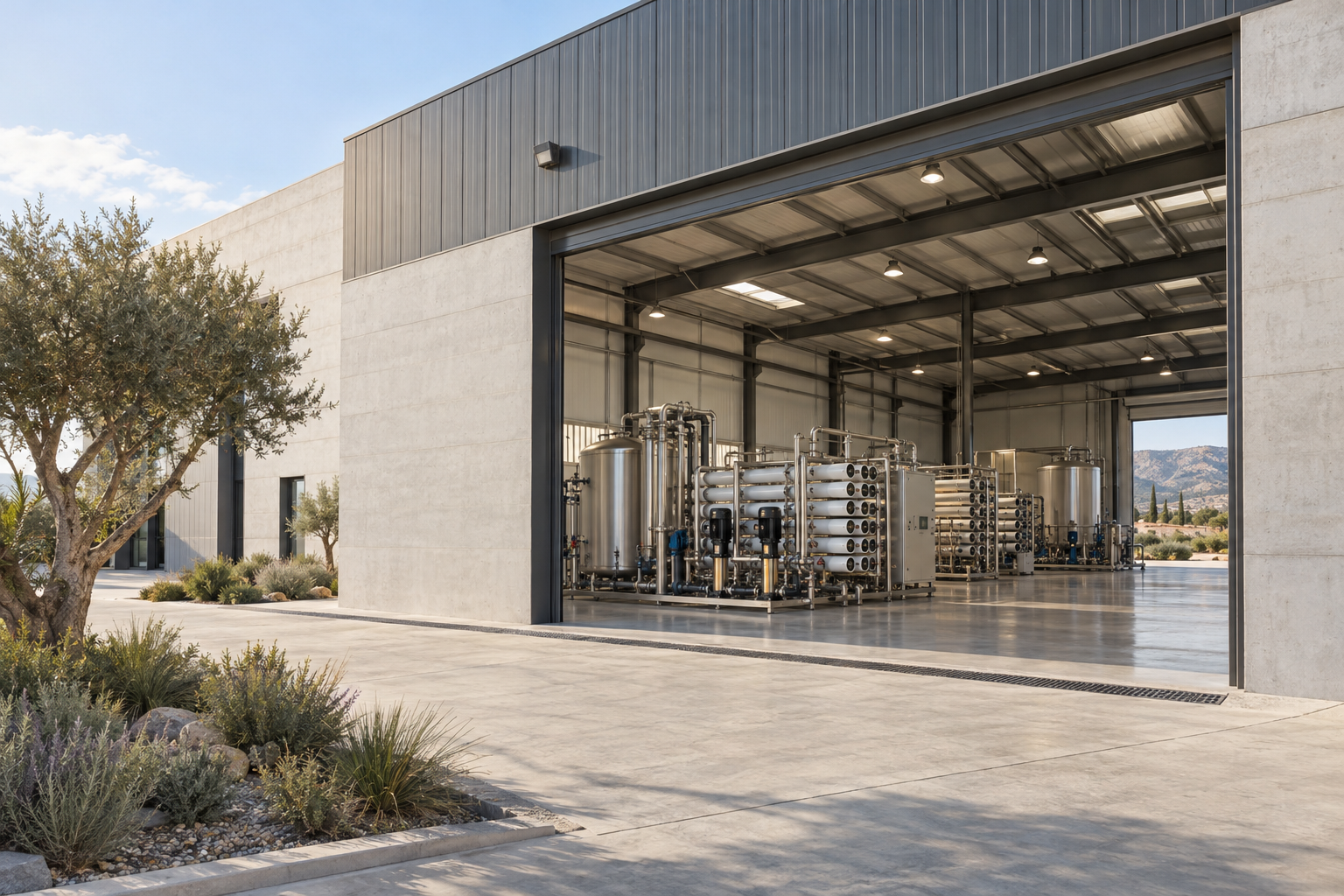
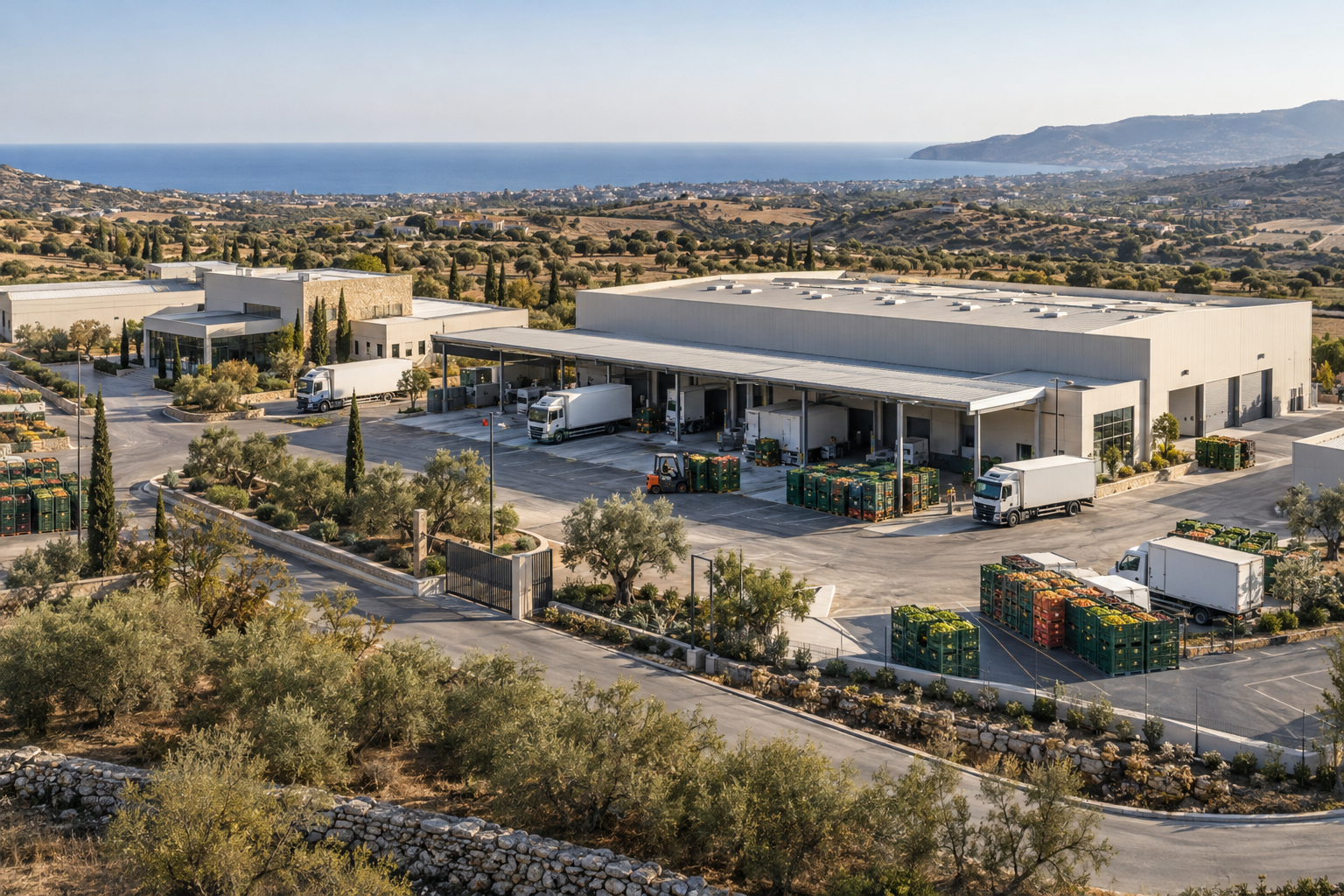
Could Paphos Support a Hotel Interiors Refurbishment Hub?
What is the opportunity in giving hotel interiors a second life?
The opportunity is to turn hotel renovation clearances into a reliable industrial service, rather than treating every removed interior as waste. Chairs can be reupholstered, tables refinished, selected kitchen equipment rebuilt and recoverable stone cut into smaller products.
For hotels and holiday-property managers in Paphos, Cyprus, the value is practical: dependable collection, consistent workmanship and delivery before rooms reopen. For smaller accommodation businesses, refurbished stock could offer an alternative to buying everything new.
An industrial refurbishment hub would bring these activities together around shared loading, storage and collection services. It would not need every trade on day one. One established furniture operator with committed work could anchor the site, with complementary tenants joining as demand becomes clearer.
These are potential market gaps, not verified absences. Existing Paphos upholsterers, carpenters, equipment technicians, stone fabricators and second-hand dealers may already meet parts of the need. The question is whether customers would pay for a coordinated, hotel-scale service that those businesses cannot currently provide, or would welcome delivering together.
Why investigate this opportunity in Paphos now?
Paphos is worth investigating because its hotels and holiday accommodation provide a relevant customer base, but a current renovation pipeline must be established through research. A tourism location alone does not prove demand for a refurbishment factory.
The useful conversations are with hotel owners, procurement teams, renovation contractors and holiday-property managers. Ask what they intend to replace, when rooms become available for work, and whether their existing suppliers can collect and return complete batches on schedule.
Also ask why items are being replaced. Structurally sound furniture with tired finishes is different from furniture that no longer meets a property's design or performance requirements.
Within Cyprus and the wider EU, reuse can support resource-efficiency goals. However, the commercial case still rests on price, quality and delivery. A refurbished chair must satisfy the buyer's specification, not merely tell a good sustainability story.
How should an anchor-led refurbishment hub start?
Start with one operator that can demonstrate technical capability and customer demand, then build shared services around its workflow. A contract furniture workshop is one possible anchor because batch work can support repeatable production.
The operator should first trial a paid batch in suitable existing or rented premises. Record collection time, labour, materials, rejects, storage days and customer acceptance. Those results should shape the premises brief.
Shared infrastructure could then include:
- Scheduled collection and delivery vehicles.
- A receiving area for inspection and condition grading.
- Separate dry storage for incoming and finished goods.
- An inventory system recording ownership, condition and location.
- Bookable loading space and agreed handling charges.
Keep dirty processes away from finished stock. Shared services should have clear responsibilities and pricing, rather than becoming an unmeasured subsidy between tenants.
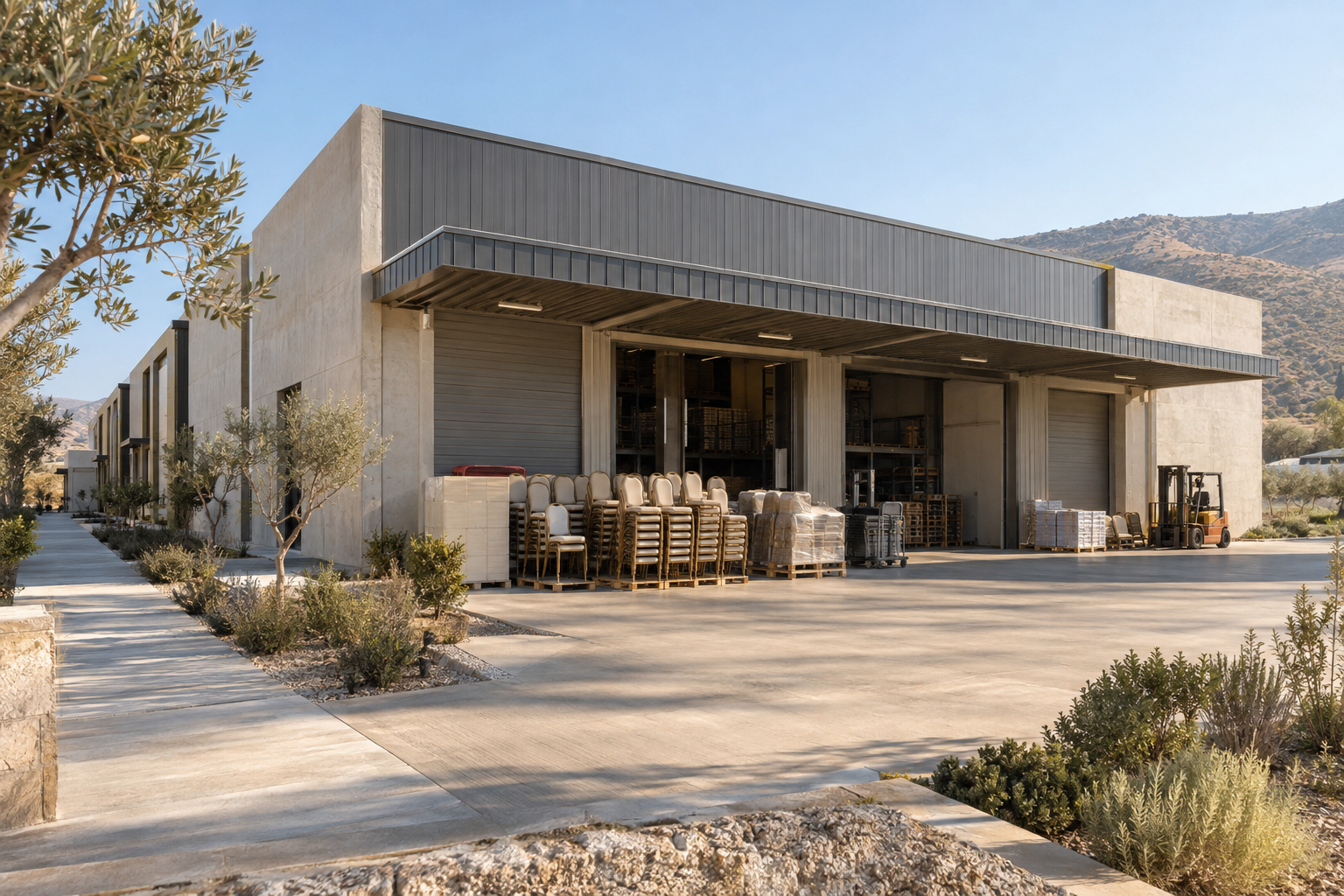
Which refurbishment businesses could work together?
Four complementary businesses deserve investigation, provided each has its own customers, competent staff and workable unit economics. Their shared advantage would be coordinated logistics, not an assumption that every recovered item has resale value.
Could a contract furniture workshop be the anchor?
A contract furniture workshop could anchor the hub by collecting, repairing and returning batches of hotel chairs, headboards and tables.
The niche to test is not ordinary upholstery or carpentry. It is consistent finishing across a whole batch within a renovation deadline. Ask procurement teams about batch sizes, sample approvals and their experience with current suppliers.
Industrial premises would allow separate stripping, spraying, upholstery and finished-goods areas, subject to the relevant approvals and safety requirements.
Planning estimate: an established small workshop could target annual revenue of €250,000 to €500,000, with an operating margin of roughly 10% to 18%. Repeatable finishes, batch contracts and paid collection would be important profit drivers.
Could a commercial kitchen rebuild centre find buyers?
A commercial kitchen rebuild centre could buy selected used equipment, rebuild and test it, then resell it with clearly defined limited warranty terms.
That is different from providing repairs alone. Investigate whether Paphos buyers already have satisfactory rebuilt-equipment suppliers locally or elsewhere in Cyprus. Begin with equipment categories the technicians know well.
Premises would need testing bays, parts storage and loading access. Electrical safety testing, any refrigeration compliance and qualified servicing must be costed into the work.
Planning estimate: annual revenue of €300,000 to €650,000, with an operating margin of around 8% to 15%, after staffing, parts and warranty allowances. Disciplined purchasing matters more than filling the warehouse.
Could recovered stone become standardised products?
A stone and solid-surface workshop could convert suitable vanity tops, counters and fabrication offcuts into smaller bathroom tops, café tables or shelving.
Existing stone fabricators may already serve this market. The opportunity depends on inexpensive, usable feedstock and repeat buyers, rather than simply adding another cutting shop.
Material assessment, safe slab handling, dust controls, wet-cutting arrangements and compliant water treatment would influence the premises design. Not every removed surface will be recoverable.
Planning estimate: annual revenue of €180,000 to €400,000, with an operating margin of roughly 10% to 18%. Allow for breakage, collection, consumables and disposal. Standardised products should be tested before relying on labour-intensive commissions.
Could a salvage depot connect the other tenants?
A hotel salvage, storage and resale depot could coordinate removals, grade stock and supply both workshop tenants and external buyers.
The service to investigate is hotel-scale clearance with dependable scheduling and searchable inventory. A general second-hand shop may not offer that combination, but local competitors must be checked.
Secure warehousing and loading space would be central. Consignment arrangements could reduce cash tied up in stock, provided ownership, storage charges and unsold-item disposal are agreed.
Planning estimate: annual revenue of €200,000 to €450,000, with an operating margin of around 8% to 15%, combining clearance fees, storage charges and resale proceeds.
What do these profit estimates actually mean?
These figures are feasibility assumptions, not observed Paphos results or promised investment returns. They describe possible established operating businesses, not guaranteed first-year performance.
For illustration, a furniture workshop generating an assumed €300,000 to €400,000 in annual revenue at an assumed 12% operating margin would produce approximately €36,000 to €48,000 in annual operating profit. Both inputs are estimates.
A business plan should define its accounting treatment and include realistic rent or occupancy costs, staffing, insurance, utilities, maintenance and rework. Land purchase, construction, fit-out, financing, tax and working capital also need separate assessment. Do not simply add all four businesses' revenue estimates together and call that a hub forecast.

What could an initial customer project look like?
An initial project should prove delivery reliability and actual costs before supporting a land purchase. The following are illustrative scenarios, not accounts of completed Paphos projects.
Illustrative scenario: Can a hotel refresh furniture in phases?
A hotel wants to retain sound dining chairs while changing upholstery and table finishes. The workshop prepares samples, obtains approval and schedules collection around room and restaurant access.
Items are tagged on arrival, repaired in batches and checked before return. The contract states what happens if hidden damage makes an item uneconomic to restore.
The commercial test is whether the customer accepts the finish and delivery schedule at a price that covers the real labour, logistics and storage costs.
Illustrative scenario: Can a clearance supply smaller properties?
A renovation contractor needs reusable interiors removed by an agreed date. A depot inspects the items before agreeing clearance and storage terms. Some go directly to resale, while selected pieces are quoted for refurbishment.
Smaller accommodation operators reserve suitable stock against condition reports. The test is whether committed buyers exist before storage costs overwhelm resale proceeds.
Which Anatoliko industrial plots could fit these ideas?
Five Domenica Group freehold plots offer useful starting points for a feasibility shortlist, subject to activity-specific planning and technical checks. All five are listed as available in the supplied inventory; availability and terms should be reconfirmed.
| Plot | Size | Price | Listed zone | Potential role |
|---|---|---|---|---|
| E12 | 1,000 m² | €230,000 + VAT | Heavy/industrial | Furniture anchor requiring separated production and storage areas |
| E13 | 1,000 m² | €240,000 + VAT | Heavy/industrial | Kitchen rebuild centre or stone workshop, subject to servicing and approvals |
| E23 | 1,000 m² | €210,000 + VAT | Light industrial/commercial | Salvage, storage and resale depot, subject to permitted uses |
| E42 | 1,250 m² | €263,000 + VAT | Light industrial/commercial | Larger storage-led operation needing more layout flexibility |
| E55a | 600 m² | €150,000 + VAT | Light industrial/commercial | Compact collection, grading or stockholding base |
For furniture refurbishment, E12 is a sensible plot to assess against extraction, finishing and loading requirements. For kitchen rebuilding, E13 merits investigation for testing bays and parts storage. A stone operator could also assess E12 or E13, but water treatment, slab movements and process controls could determine suitability.
For the depot, E23 offers a 1,000 m² starting point, while E42 provides more land for arranging circulation and storage. E55a suits a smaller brief, not an assumed four-business hub.
Domenica Group's Anatoliko offering has Ba5/Bd5 zoning, 80% building density, 60% coverage and two floors. Confirm each plot's applicable controls and permitted activities. These parameters are not automatic approval for spraying, cutting, equipment processing or unrestricted retail sales.
The stated location is approximately one minute from the Limassol to Paphos highway, ten minutes from Paphos airport and five minutes from Paphos. Treat these as indicative driving times, dependent on route and traffic.

When should you consider combining adjacent plots?
Combining adjacent plots becomes worth exploring when a committed operation needs more space for buildings, vehicle movements and properly separated processes. Domenica Group plots can be combined, subject to confirming the specific parcels and applicable requirements.
A larger site could accommodate shared loading, dedicated finished-stock storage and future tenant units. It could also reduce conflicts between delivery vehicles and workshop activity.
Do not assume that consecutive plot codes prove adjacency. Ask for the estate plan, confirm boundaries and availability, and have an architect test the layout. Buying expansion land too early ties up capital that the operator may need for equipment and working stock.
What should you validate before buying land?
Validate customers, competition, operations and permissions before committing to the property. A practical decision checklist is:
- Map local and Cyprus-wide competitors, including potential partners.
- Establish a dated renovation pipeline, not just expressions of interest.
- Obtain paid trials, conditional contracts or credible customer commitments.
- Secure feedstock terms and identify buyers for refurbished goods.
- Check utilities, access, fire safety, environmental controls and applicable Cyprus and EU obligations.
- Price construction, equipment, transport, insurance, disposal and working capital.
- Stress-test slower sales, delayed projects and higher rejection rates.
Paphos may have room for a well-run refurbishment hub, but the strongest project will begin with a service customers already want. If you are exploring that next step, share your details, intended activities and space requirements with a Domenica Group specialist for a tailored quotation and offer, based on suitable plots and a realistic development brief.
Plots that fit this idea
Frequently asked questions
Could Paphos support a hotel furniture refurbishment hub?
Potentially, if an operator secures enough batch refurbishment work at viable prices. The opportunity is coordinated collection, consistent finishing, storage and scheduled return, not an assumed absence of existing workshops. Validate local competition, renovation projects and customer commitments first.
Which business should anchor a hotel interiors refurbishment hub?
An established contract furniture workshop is one possible anchor because hotel batches can support repeatable processes. The best anchor is ultimately the operator with proven skills, credible contracts and sufficient working capital, whether in furniture, equipment rebuilding or another complementary trade.
What returns could a furniture refurbishment workshop achieve?
A planning estimate for an established small workshop is annual revenue of €250,000 to €500,000 and an operating margin of roughly 10% to 18%. These are not observed Paphos results or guaranteed returns. Land, construction, financing and working-capital requirements must be assessed separately.
Which industrial plots in Anatoliko could suit a refurbishment business?
The shortlist includes E12, 1,000 m² at €230,000 + VAT; E13, 1,000 m² at €240,000 + VAT; E23, 1,000 m² at €210,000 + VAT; E42, 1,250 m² at €263,000 + VAT; and E55a, 600 m² at €150,000 + VAT. All are listed as available in the supplied inventory. Suitability depends on the proposed activity, permissions, utilities and layout.
Can adjacent industrial plots be combined for shared workshops and storage?
Domenica Group plots can be combined, subject to confirming adjacency, availability and applicable requirements. A combined site could support separate workshops, shared loading and storage, but the estate plan and an architectural feasibility study should establish which parcels and layout work.