Could Paphos Support a Shared Food Logistics Park?
What is the opportunity for a shared food logistics park?
The opportunity is to earn from several stages of the food supply chain, while giving smaller businesses access to facilities they may not be able to build independently.
Imagine produce arriving from a grower, being graded and packed, entering chilled storage, then leaving in consolidated orders for hotel kitchens. Reusable crates return for washing. Suitable surplus produce goes to a separate freezing operation, provided customers have booked that service and the product meets acceptance requirements.
Each step could generate revenue. More importantly, each solves a different operational problem for growers, wholesalers and hospitality suppliers around Paphos, Cyprus.
This is an under-service hypothesis, not a claim that Paphos lacks existing providers. The potential opening is flexible access: smaller quantities, shorter production runs, seasonal overflow and practical minimum charges.
For an industrial land investor, there are several possible models. Lease specialist units to food operators, run selected services directly, or combine leases with an operating partnership. Operating income offers a different opportunity from warehouse rent, but also brings staffing, compliance and business risk.
Why consider Paphos and Anatoliko now?
Paphos is worth investigating because its agricultural and hospitality supply chains offer potential customers for shared infrastructure, although unmet demand still needs evidence.
Hotels and restaurants need dependable deliveries. Growers need routes to market. Smaller suppliers need enough flexibility to handle busy periods without carrying the cost of oversized premises throughout quieter months.
The first research task is therefore practical: ask existing providers what they already offer, then ask buyers where minimum volumes, turnaround times or seasonal capacity cause difficulty.
Domenica Group’s freehold industrial plots in Anatoliko are approximately one minute from the Limassol to Paphos highway, five minutes from Paphos and ten minutes from Paphos airport. These indicative travel times depend on traffic and the destination.
For a food park, highway access may matter most for collection and delivery rounds. Airport proximity adds location context, but should not be treated as proof of an air-freight business case.
Which services could share one food logistics park?
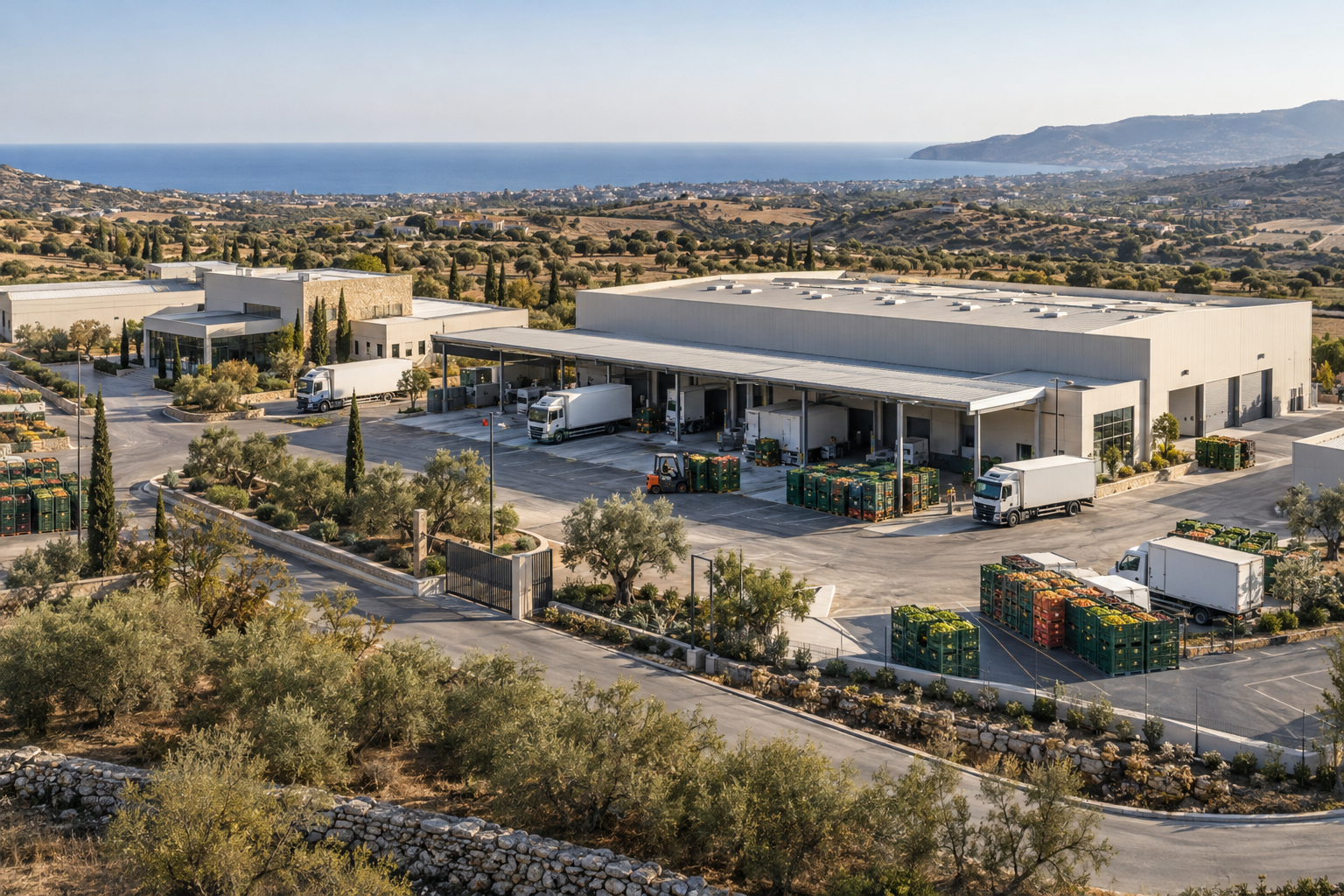
Five complementary services could share a site, provided their hygiene requirements, customer demand and operational flows are compatible.
Could flexible chilled and frozen storage provide the foundation?
Pay-as-you-grow storage could provide recurring revenue from pallet spaces, goods handling and order picking. A smaller supplier might book a few spaces rather than take a dedicated warehouse.
The gap to test is availability on workable terms, not cold storage generally. Ask about minimum contracts, temperature ranges and peak-season access at existing facilities.
Anchor contracts and minimum monthly charges would help cover electricity and staffing outside the tourist peak. Temperature monitoring, maintenance and emergency procedures are fundamental operating costs.
Could contract blast-freezing support short production runs?
Contract blast-freezing could serve producers that need occasional batches rather than their own freezing equipment. Charges could combine a per-kilogram or batch fee with separate packing and frozen-storage fees.
Keeping stock customer-owned can reduce inventory exposure, although the operator still carries handling and food-safety responsibilities.
Before investing, verify whether nearby facilities already accept third-party batches and at what minimum volumes. Products also need technically validated freezing, packaging and storage processes, not simply access to a cold room.
Could a shared packing house help smaller growers?
A shared produce grading and packing house could help growers meet wholesale and hospitality specifications without buying a complete equipment line.
Revenue could come from weighing, grading, packing and labelling, charged per crate or kilogram, plus packaging fees. Handling crops with different harvest windows could improve utilisation, subject to equipment suitability and cleaning requirements.
The commercial question is whether growers will pay enough for accessible contract packing. Agricultural activity alone does not establish that demand.
Could fresh-cut produce save hospitality kitchens time?
A fresh-cut unit could supply washed, peeled and portioned vegetables through recurring agreements with hotels, caterers and restaurants.
The strongest proposition might be smaller minimum orders, reliable early delivery or preparation to each kitchen’s specification. Interviews must establish which of those needs current suppliers already meet.
Pre-orders would be essential. Labour, trimming losses, refrigeration, shelf life and delivery density can quickly erode an apparently attractive selling price. This activity needs hygienic segregation from incoming unwashed produce and dirty containers.
Could crate washing become a supporting business?
A reusable food-crate washing and rental depot could earn per-wash charges, rental income and collection fees from park users and outside customers.
Co-location may reduce transport costs, but only if collection routes and return volumes work. Crate losses, slow returns, water use and wastewater treatment need tight controls.
Validate demand for a documented sanitation and collection service, rather than assuming that businesses buying plastic crates will also want pooling or rental.
What might the operating profits look like?
Early profit modelling should use estimates and customer-backed volumes, not treat service margins as guaranteed investment returns.
The following are illustrative stabilised operating-margin estimates, before depreciation, financing and tax, rather than verified Paphos benchmarks:
- Chilled and frozen storage: roughly 10% to 20%.
- Contract blast-freezing and frozen packing: roughly 10% to 20%.
- Produce grading and packing: roughly 8% to 15%.
- Fresh-cut produce: roughly 8% to 18%.
- Crate washing and rental: roughly 10% to 20%.
For example, estimated annual storage revenue of EUR 250,000 to EUR 350,000 at the estimated margin range above would imply approximately EUR 25,000 to EUR 70,000 in operating profit before depreciation, financing and tax.
A packing operation with estimated annual revenue of EUR 200,000 to EUR 300,000 could similarly produce approximately EUR 16,000 to EUR 45,000 on that basis.
These calculations are illustrations, not forecasts. Model labour, electricity, maintenance, insurance, waste, transport and premises costs consistently. Land, construction, refrigeration equipment and working capital need separate funding. Do not add service profits together without allocating shared costs and checking capacity constraints.
Which Anatoliko plots could fit the five ideas?
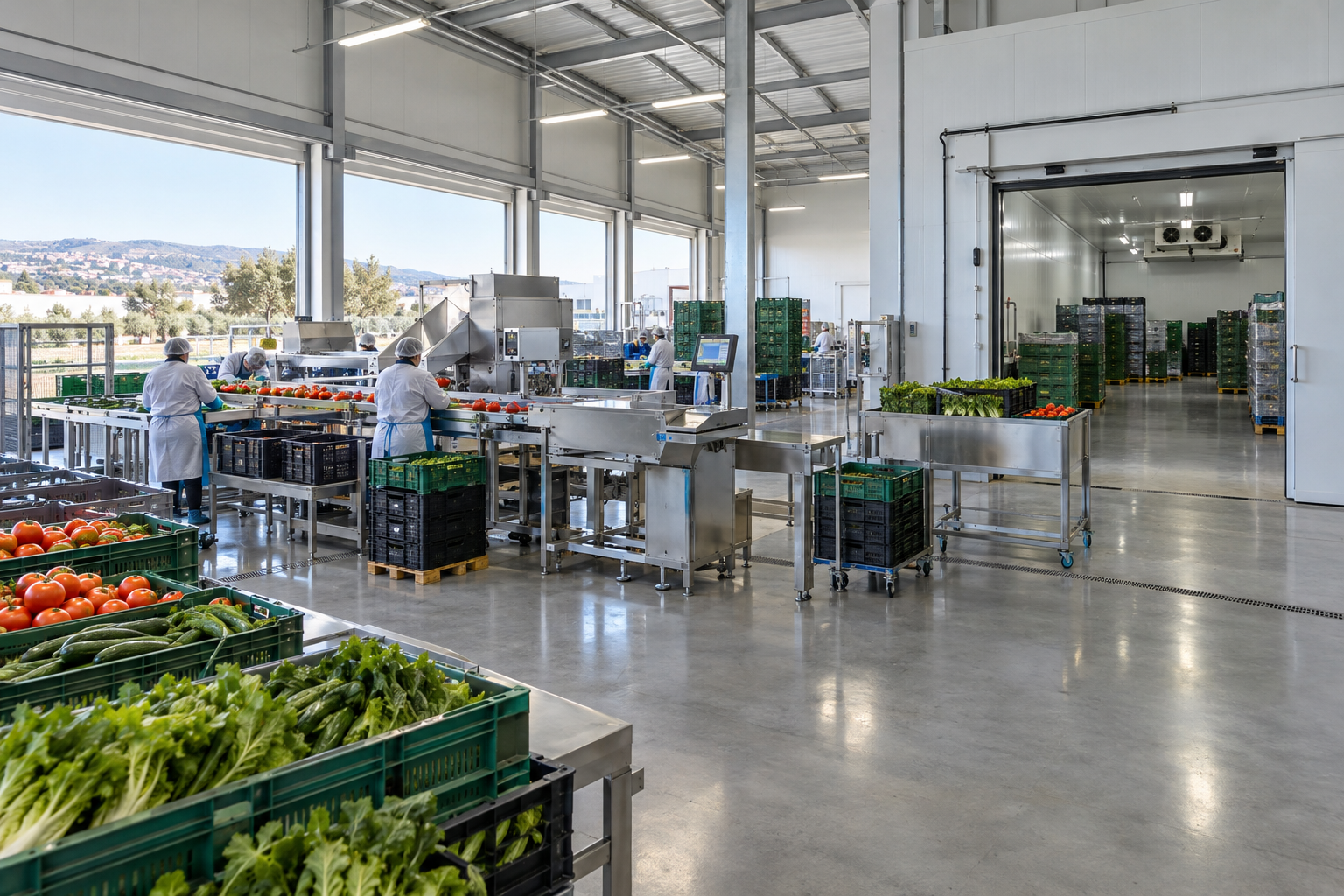
Five available plots offer useful starting points, but none should be considered approved for a food activity without project-specific checks.
Domenica Group’s Anatoliko estate has Ba5/Bd5 zoning, with stated parameters of 80% building density, 60% coverage and two floors. Confirm the applicable designation and conditions for each selected plot. These parameters do not establish usable cold-store capacity or automatic permission for processing.
| Service concept | Plot | Size | Asking price | Why investigate it? |
|---|---|---|---|---|
| Flexible chilled and frozen storage | E12 | 1,000 m² | EUR 230,000 + VAT | An available heavy/industrial plot to test for a first-phase storage building and loading yard. |
| Blast-freezing and frozen packing | E13 | 1,000 m² | EUR 240,000 + VAT | An available heavy/industrial option for a specialist unit, subject particularly to power and use approvals. |
| Produce grading and packing | E36 | 1,042 m² | EUR 219,000 + VAT | An available light industrial/commercial plot to test for equipment, dispatch and separated receiving areas. |
| Fresh-cut produce | E42 | 1,250 m² | EUR 263,000 + VAT | An available light industrial/commercial option with more land for evaluating hygienic separation, servicing and circulation. |
| Crate washing and rental | E23 | 1,000 m² | EUR 210,000 + VAT | An available light industrial/commercial starting point, conditional on wash-water arrangements and permitted use. |
These are concept matches, not final recommendations. Setbacks, parking, fire access, loading movements and plant space can materially reduce the area available for productive operations. Confirm prices and availability when requesting an offer.
What must be checked before committing capital?
Investment should follow anchor-customer commitments and a technical feasibility review of the exact proposed activities.
Start with a short, evidence-led checklist:
- Customer commitments: establish monthly volumes, seasonal variation, minimum charges, service specifications and credible contract terms.
- Permitted uses: confirm storage, packing, food preparation, freezing and crate washing separately with the relevant Cyprus authorities.
- Electricity: obtain confirmation of available capacity, connection costs, upgrade timing and refrigeration resilience options.
- Drainage: verify wastewater acceptance, solids interception, treatment needs and cleanable floor-drain layouts.
- Food safety: plan applicable Cyprus and EU registration or approval requirements, HACCP-based procedures, traceability and temperature controls. Animal-origin products may require additional approvals.
- Site operations: assess vehicle turning, waste handling, refrigerant safety, noise and separation of clean and dirty traffic.
Use qualified planning, engineering and food-safety advisers before finalising the design. A suitable industrial address is the beginning of due diligence, not the conclusion.
How could a smaller supplier use the park?
A smaller supplier could buy only the services it needs, rather than finance an entire processing and storage facility.
Illustrative scenario: a grower serving hospitality buyers
A grower agrees weekly orders with a hospitality wholesaler. The park grades and packs the produce, holds it briefly in chilled storage and prepares collection orders. The grower retains ownership of the stock and pays handling, packing and storage charges.
A separate freezing service is used only when a buyer has committed to the frozen product. It is not treated as an automatic outlet for unsold produce.
This illustrative scenario is not an existing customer case. Its viability depends on committed throughput, acceptable service charges and product quality. For the park, the attraction is earning from several useful tasks without necessarily purchasing the food itself.
When does combining adjacent plots make sense?
Combining adjacent plots makes sense when a validated project needs more room for safe circulation, separate production zones or future expansion.
Domenica Group’s plots can be combined, subject to confirming adjacency, availability and the relevant planning arrangements. Do not infer adjacency from plot numbering alone.
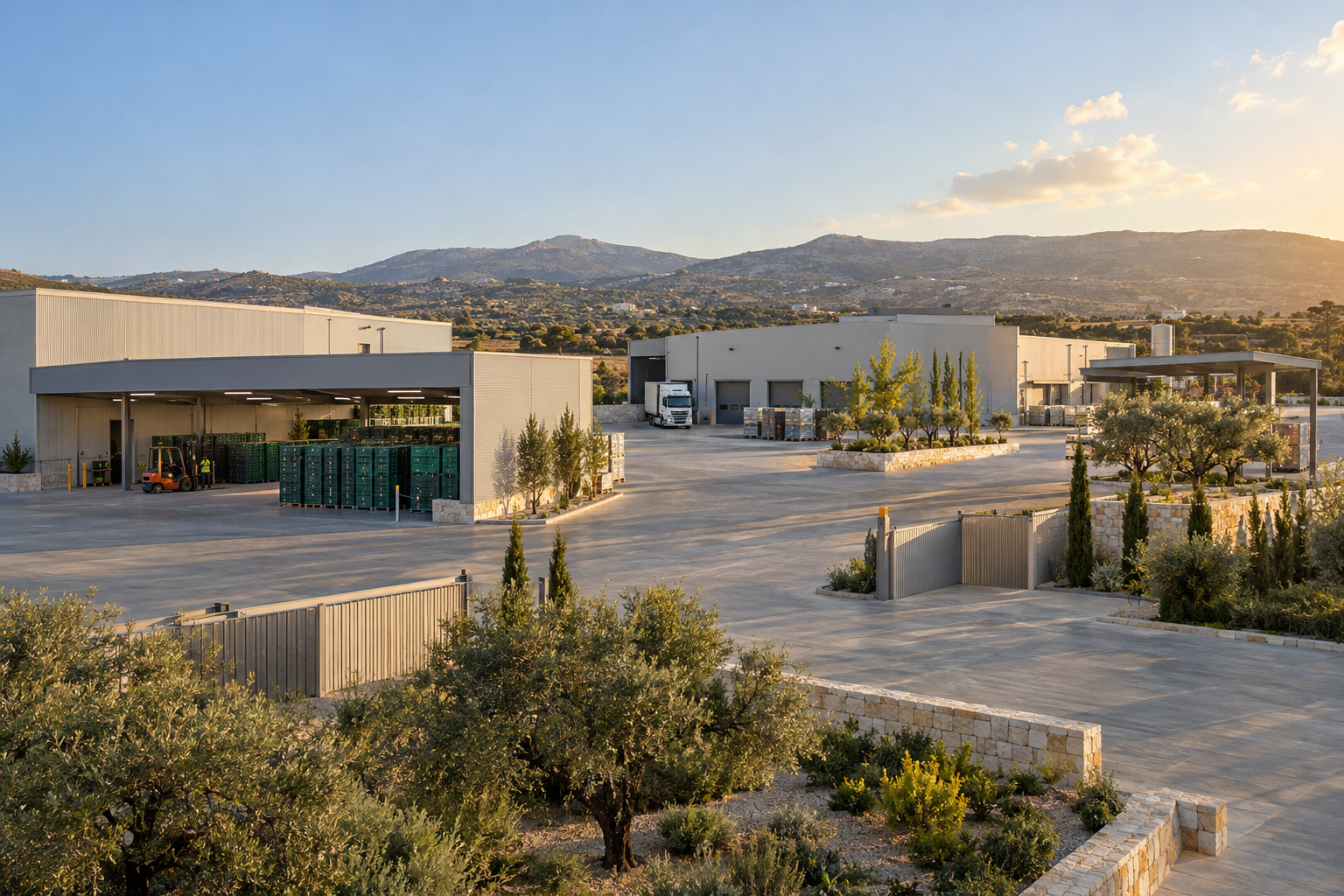
A larger site could accommodate a shared loading yard, separate chilled and frozen chambers, a packing hall and a physically segregated crate-washing area. It may also leave space for utilities and later customer-led growth.
Buy expansion capacity for a reason. A phased masterplan should show what opens first, which anchor contracts support it and what demand would trigger the next building. Larger landholdings do not automatically produce better returns.
What is the sensible next step?
The sensible next step is to match a customer-backed operating brief with a technically suitable plot or confirmed adjacent combination.
Paphos does not need a speculative promise that every food service will succeed. It needs a clear answer to a simpler question: which local businesses will pay for reliable shared facilities, and on what terms?
Share your details, intended activities, expected throughput and space requirements with a Domenica Group specialist. The team can help identify suitable Anatoliko options and prepare a tailored quotation and offer, with the proposed use remaining subject to technical and regulatory confirmation.
Plots that fit this idea
Frequently asked questions
Could Paphos support a shared food logistics park?
Potentially, if growers, wholesalers and hospitality suppliers commit enough recurring business. The opportunity is flexible access for smaller operators, not an assumption that Paphos has no existing cold-storage or packing providers. Local demand and competing services need validation.
How could a food logistics park earn more than warehouse rent?
It could charge for chilled and frozen storage, handling, order picking, produce packing, contract freezing and crate washing. Investors could lease units to specialist operators or participate in service businesses, but operating revenue brings costs and risks that ordinary rent does not.
Which Anatoliko plots could suit food logistics activities?
Initial options include E12 for cold storage, E13 for blast-freezing, E36 for produce packing, E42 for fresh-cut preparation and E23 for crate washing. These are conditional concept matches. Each activity requires confirmation of permitted use, utilities, drainage, layout and food-safety requirements.
What approvals and infrastructure checks are needed in Cyprus?
Check project-specific planning and building requirements, electricity capacity, drainage and wastewater arrangements, and applicable Cyprus and EU food-business registration or approval requirements. HACCP-based procedures, traceability, temperature control and hygienic separation should inform the design from the outset.
Can adjacent industrial plots be combined for a larger food park?
Domenica Group’s Anatoliko plots can be combined, subject to confirmed adjacency, availability and planning arrangements. A combined site could provide shared loading areas and separate service units, but expansion should follow anchor-customer commitments rather than assumptions about future demand.